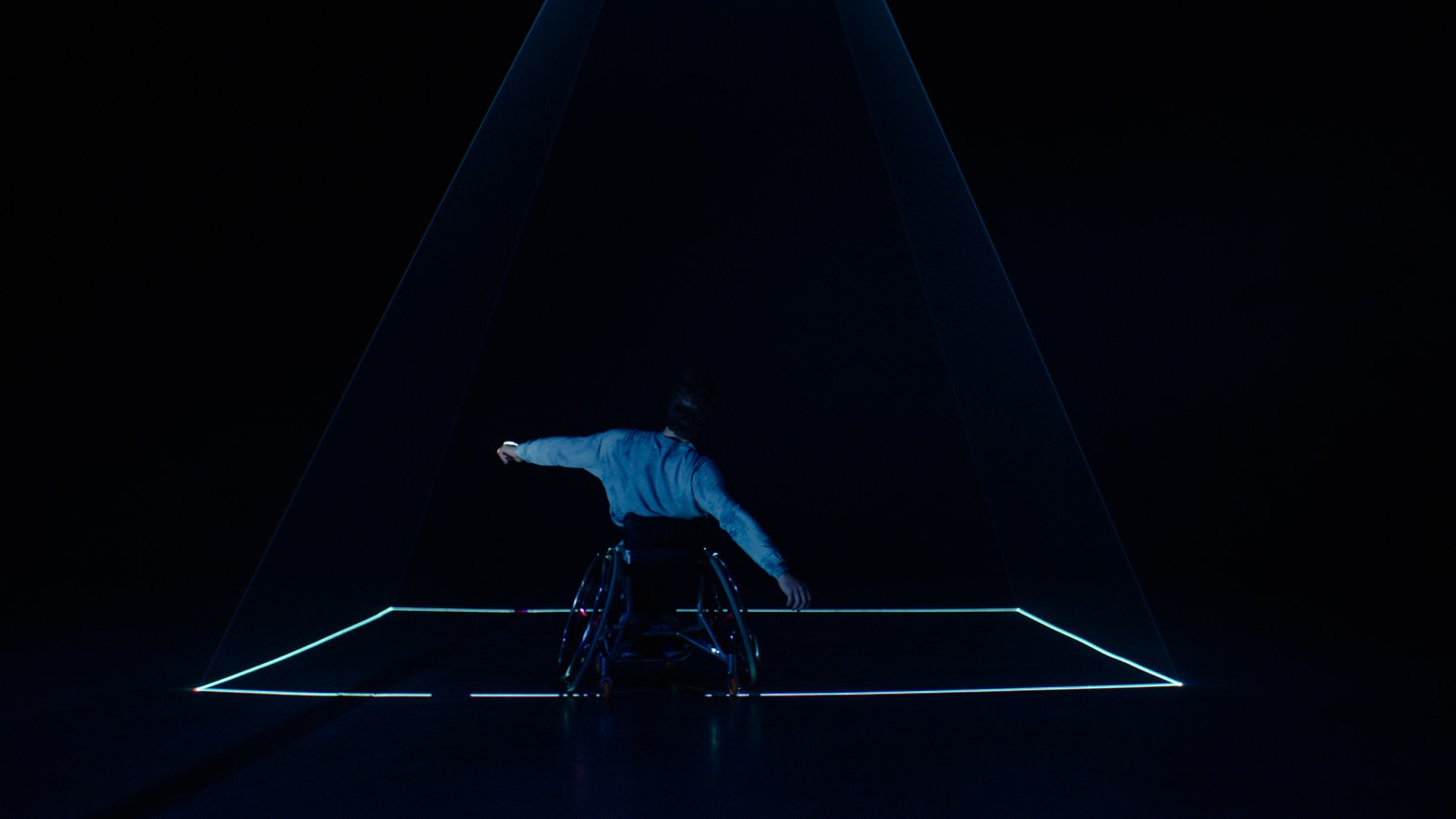
Spinning Bodies: CYCLING WHEELS opens a transdisciplinary cycle track and multimedia arena. At the interface between performance, contemporary circus, and sound art, the bicycle simultaneously becomes an artistic medium – a vehicle, instrument, and actress.
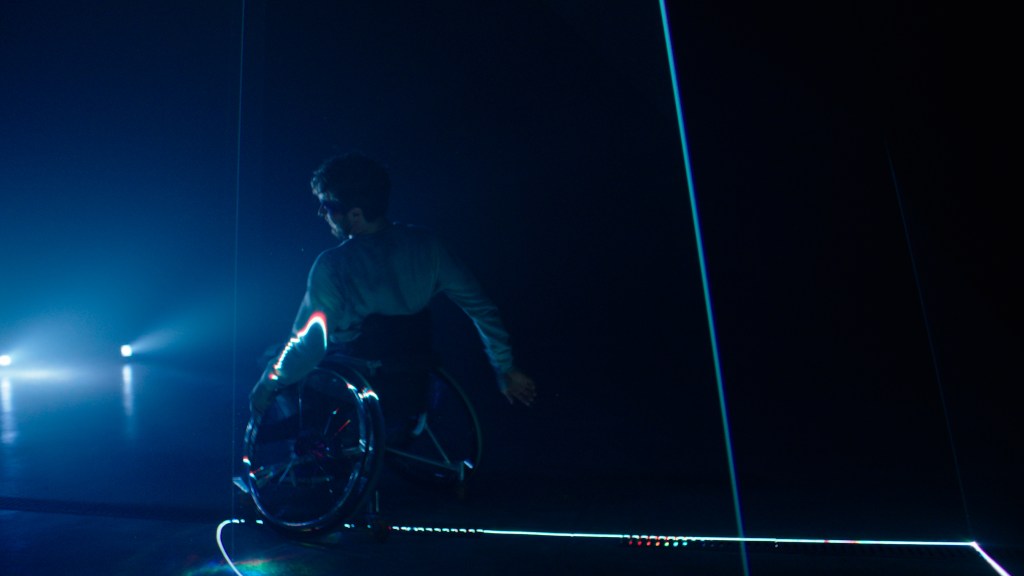
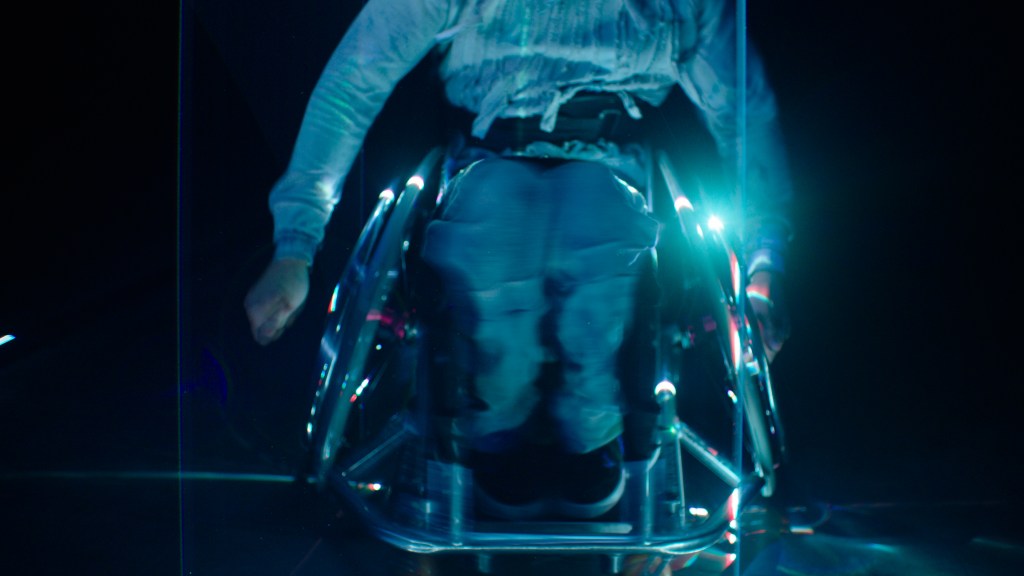
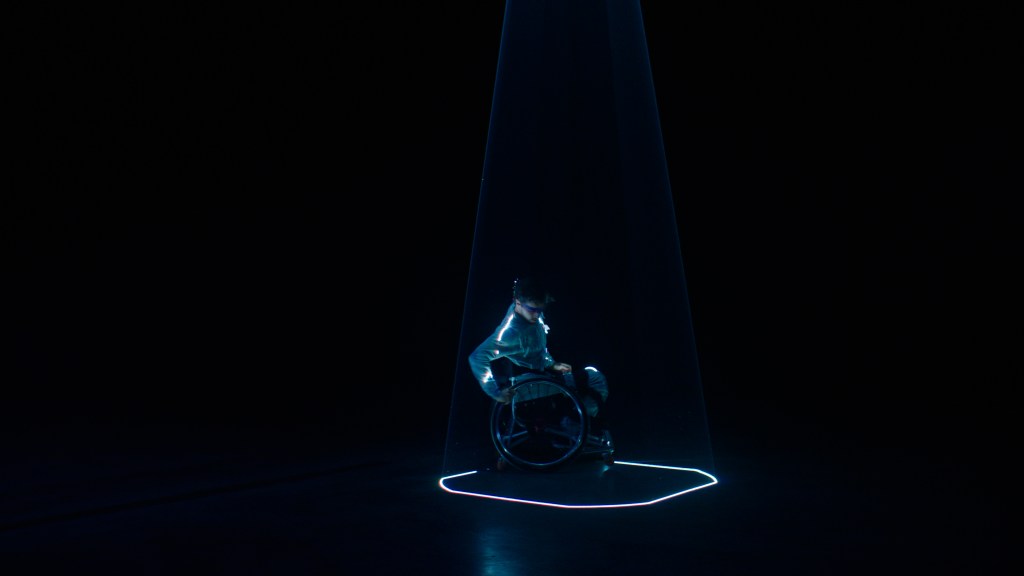
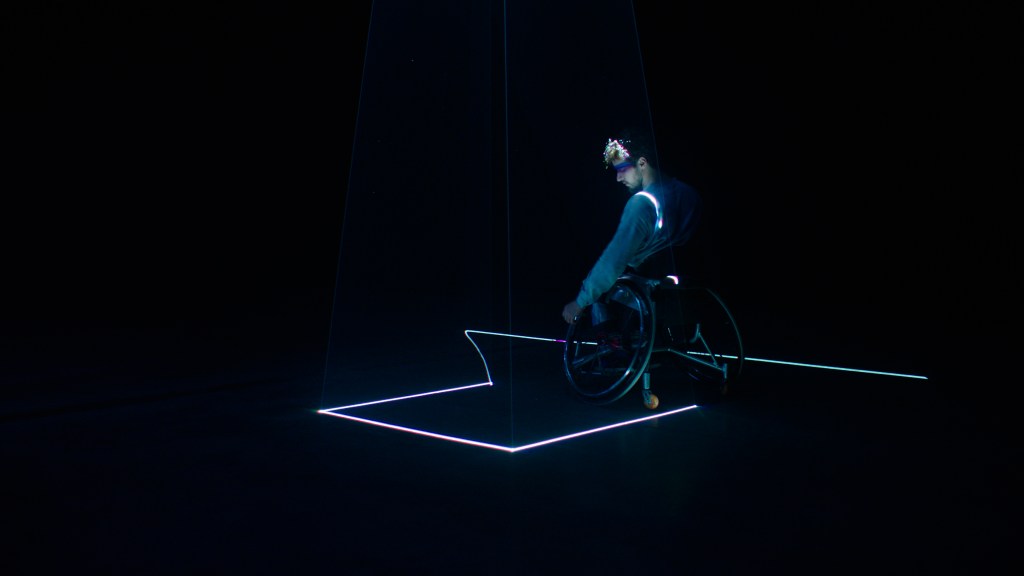
Performers on bicycles with various mobile loudspeakers rotate around the audience as a moving sound performance, creating a multi-channel electronic sound experience. The spatial experience changes acoustically and visually through movement. It is expanded by projection, light, and the narrative use of adapted sports gear and custom bicycles from Bikepolo and wheelchair basketball. The sound and movement scores include graphically documented examples of historical cycle dance formations. Cycle dance was a form of cycling culture popular around the turn of the last century. In that dance, (quadrille), gymnastics, and parade elements were implemented with the bike and was performed in gymnasiums or squares all over Vienna, among other places. Fluidity, aspects of the hybrid, and the in-between are developed into a choreography of a contemporary cycle dance and reinforced by the choral composition of sounds.
Spinning Bodies: CYCLING WHEELS explores the possibilities of movement transformation and translation processes: The changing positions of performers and sound on the bicycle create acoustic and spatial experiences that constantly transform the space and integrate it dynamically. Parameters such as speed, tempo, and distance of the soundbikes directly influence the sound and image.
The relational play with bodies, formations, wheels, music, and light results in its own visual-acoustic choreography: these are forms of movement that are process-oriented, open-ended, and not linear in their reading direction, but concentric, spiral-shaped, multi-channel, hybrid, collective, and multi-layered. Methodologically, this can be used to describe a queer form of movement and from this, in turn, to develop a queer methodology. Constructivist and post-structuralist performance theories define gender identity as a socio-cultural construction that is only produced, learned, and performed through the practical repetition of culturally transmitted norms, in linguistic expressions and physical actions, in the (everyday) communication and interaction of people. This is also where the resistant potential of the performative lies. Conversely, performative acts can open up new possibilities for action. Through performative gestures, the norms and rules of individual and social reality – such as the tendency towards social simplification through binary models of thought – can be renegotiated, and normative patterns of movement and thought processes can be deconstructed.
Film Credits:
Performance: Bokan M. Assad, Emilio Atrio, Omayra Bolaños, Astrid Eder, Gischt, Philipp Hochenburger, Gratis Kaiserin, Annick Kleiner, Cornelia Scheuer, Anish Singh, Alex Suppan
Regie: Conny Zenk
Cinematographie: Ioana Tarchila, Jan Polak
Schnitt: Hannes Starz
Musik: Gischt
Laser: Jerobeam Fenderson, hansi3d
Technische Leitung: Georg Hartl
Camera Operator: Ioana Tarchila
Sounddesign: Florian Kindlinger
Choreographie: Philipp Hochenburger, Cornelia Scheuer, Anish Singh, Alex Suppan, Conny Zenk
Participative Skulptur: Rodeorad #3 by Gratis Kaiserin
Kostüm: Anna F. Schwarz
Maske: Isabella Gajcic
Director Assistant: Markus Liszt
Licht: Jan Polak & Georg Hartl
Color Grading: Dimitri Aschwanden
Produktionsleitung: Lena Kauer | der goldene shit
Produktion: amaze | HAZE

 Conny Zenk