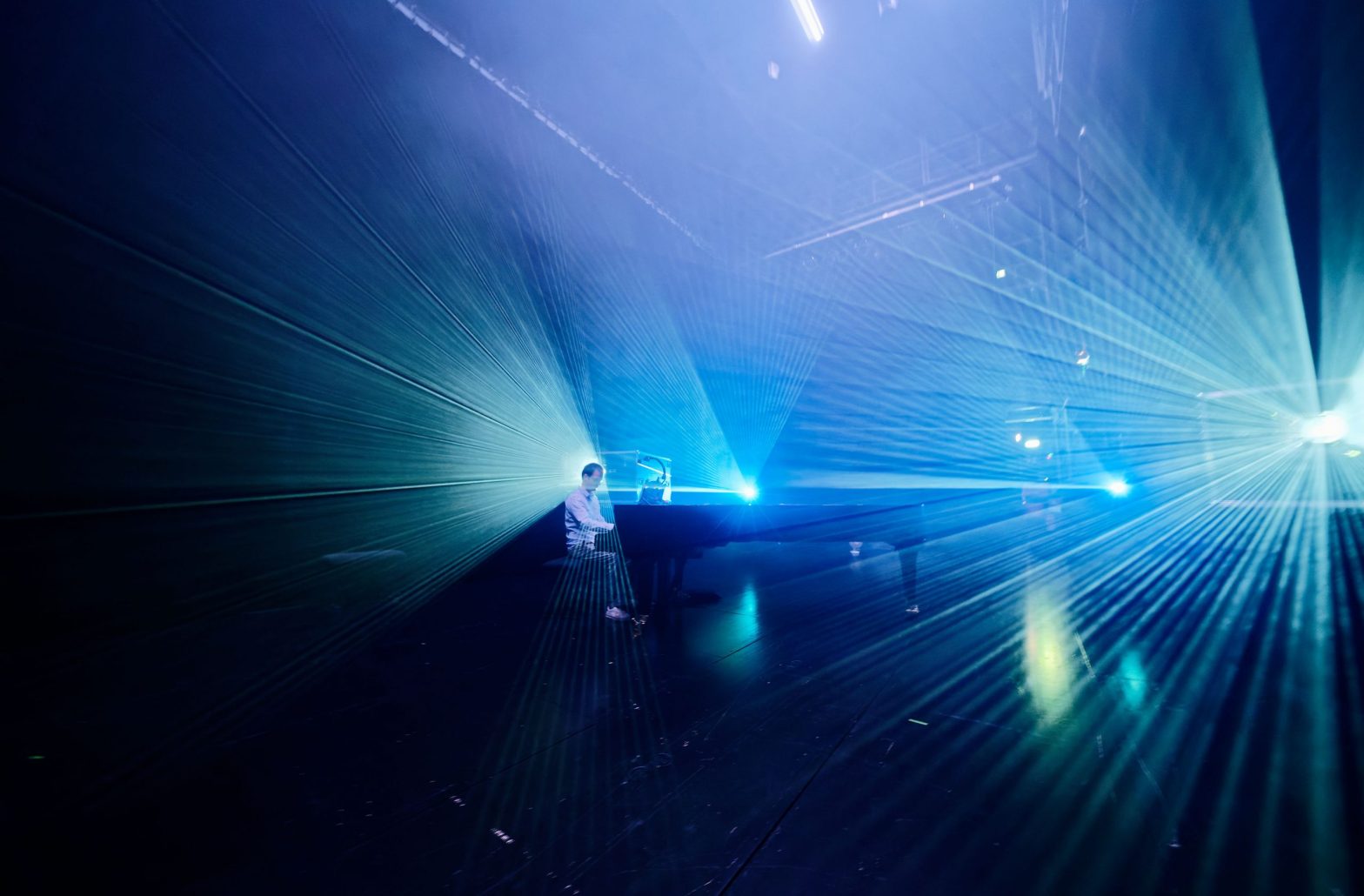
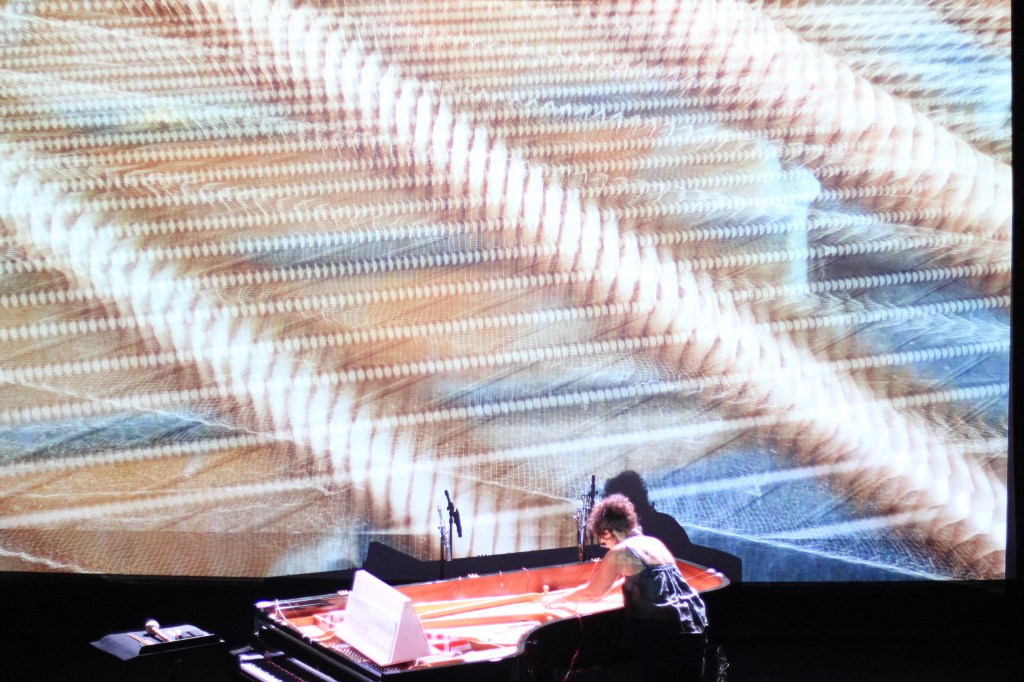
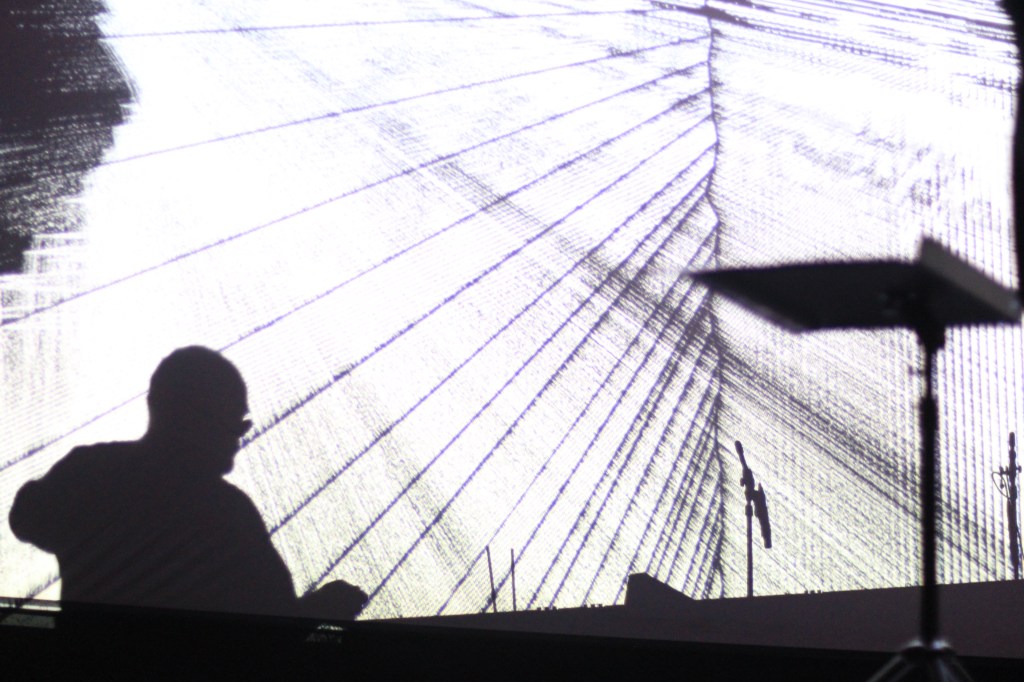
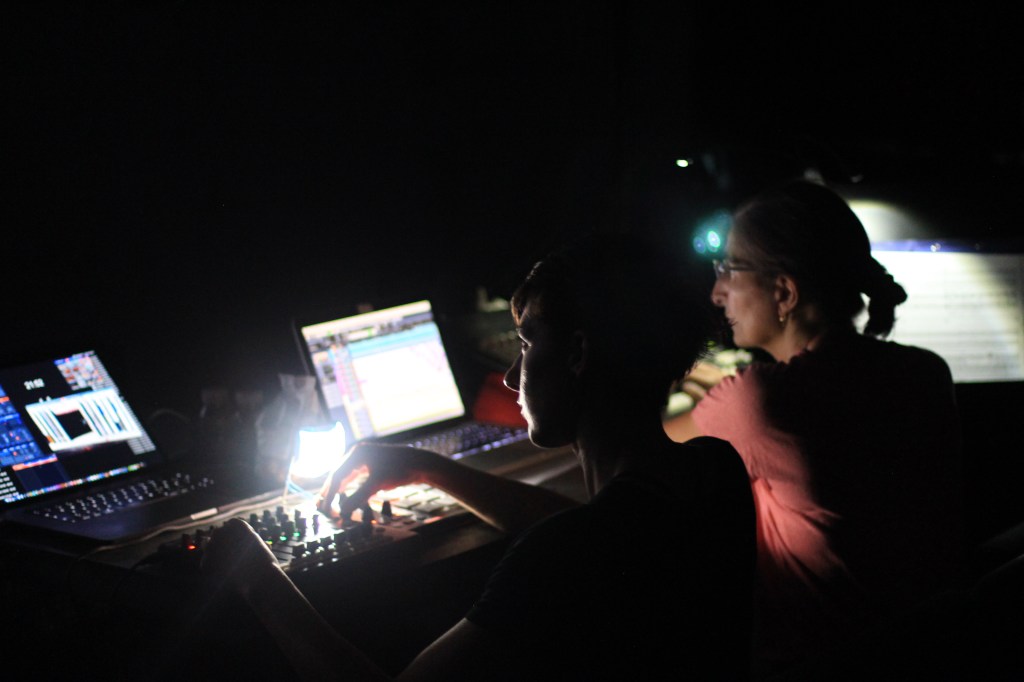
Wir befinden uns in einem mit Nebel durchfluteten Raum. Dabei verändern die Räume aus Licht und Projektion ihre Architektur bezugnehmend auf die Komposition. Es entstehen Wiederholungen, Referenzen und Überlagerungen. Gleichzeitig spielt die Projektion im Raum mit sinnlicher Wahrnehmung: die projizierten Lichtstrahlen treffen direkt auf die Körper der MusikerInnen, aber auch auf die des Publikums. Es handelt sich um eine ephemere, kaum greifbare, aber spürbare Lichtarchitektur, die über die Positionierungen und Plätze der ZuschauerInnen ganz unterschiedlich auf das Publikum einwirkt. Die Perspektive bestimmt in diesem Fall die Wahrnehmung, das Publikum befindet sich gemeinsam mit dem Ensemble in einem gemeinsamen Raum. Die visuelle Komposition orientiert sich an der Musik sowie an der Partitur, welche die grundlegenden Cues vorgibt. In der Live-Komposition ergibt sich die Möglichkeit in Echtzeit bzw. im Moment direkt auf die Architektur und die unterschiedlichen Räume zu reagieren, und mit dem Ensemble in visuelle Interaktion zu treten. Durch die unterschiedlichen Medien und Blickachsen gelingt es in reale, fast greifbare Landschaften einzutauchen und mittels Videoanimation den Rahmen für die Imagination zu eröffnen.
KV15dd Architekturen aus Licht und Projektion von: Conny Zenk Musikalische Interpretation: Tzu-Yu Yang (Hammerflügel), Carlos Goikoetxea (Cembalo), David Ebner (Klavier), Curtis Hsu (Klavier)
Produktion Installation / Lichtarchitektur: Conny Zenk Analyse / Stück: Yaara Tal Andreas Groethuysen Katharina Klement Tonaufnahme: Sascha Tekale
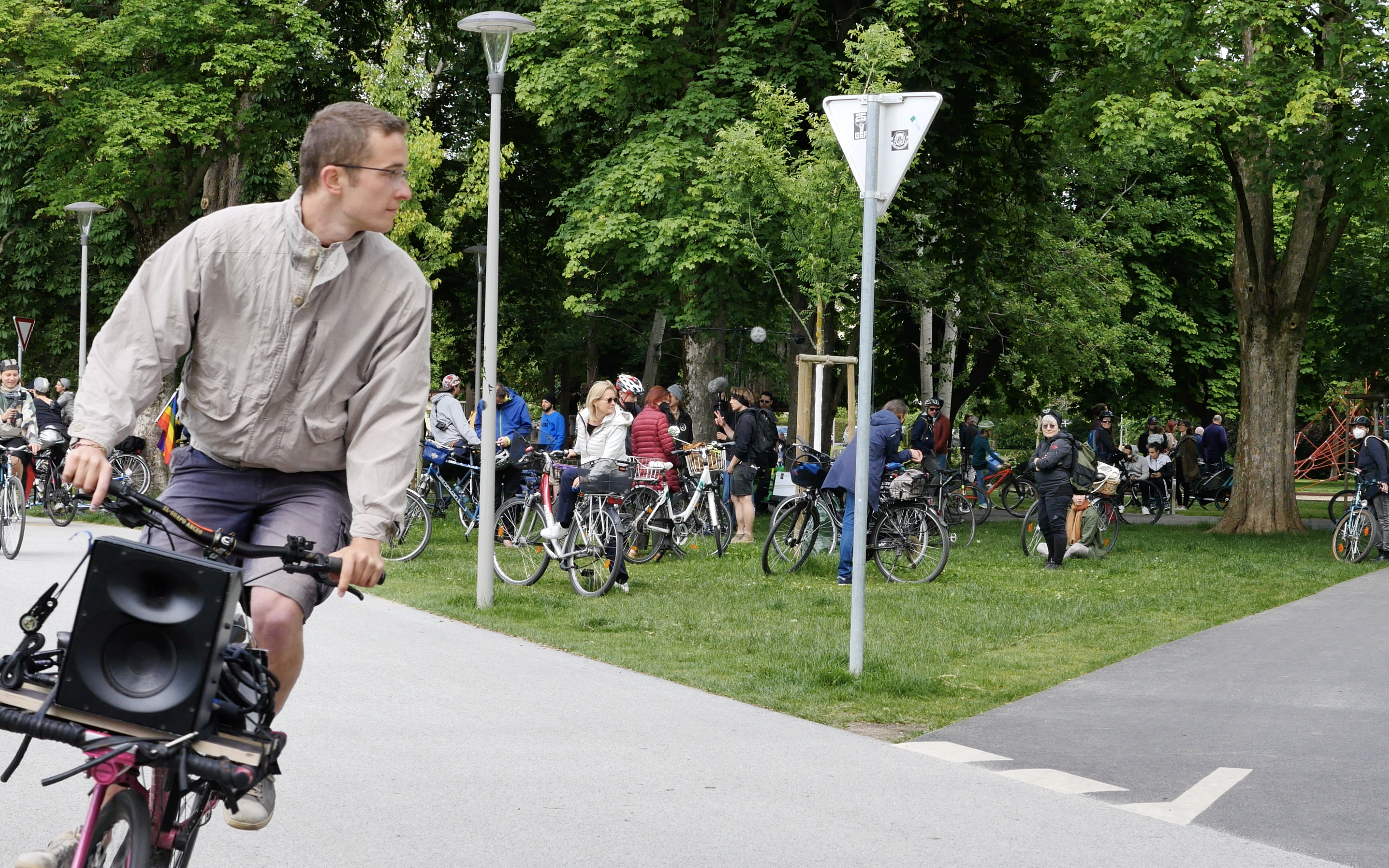
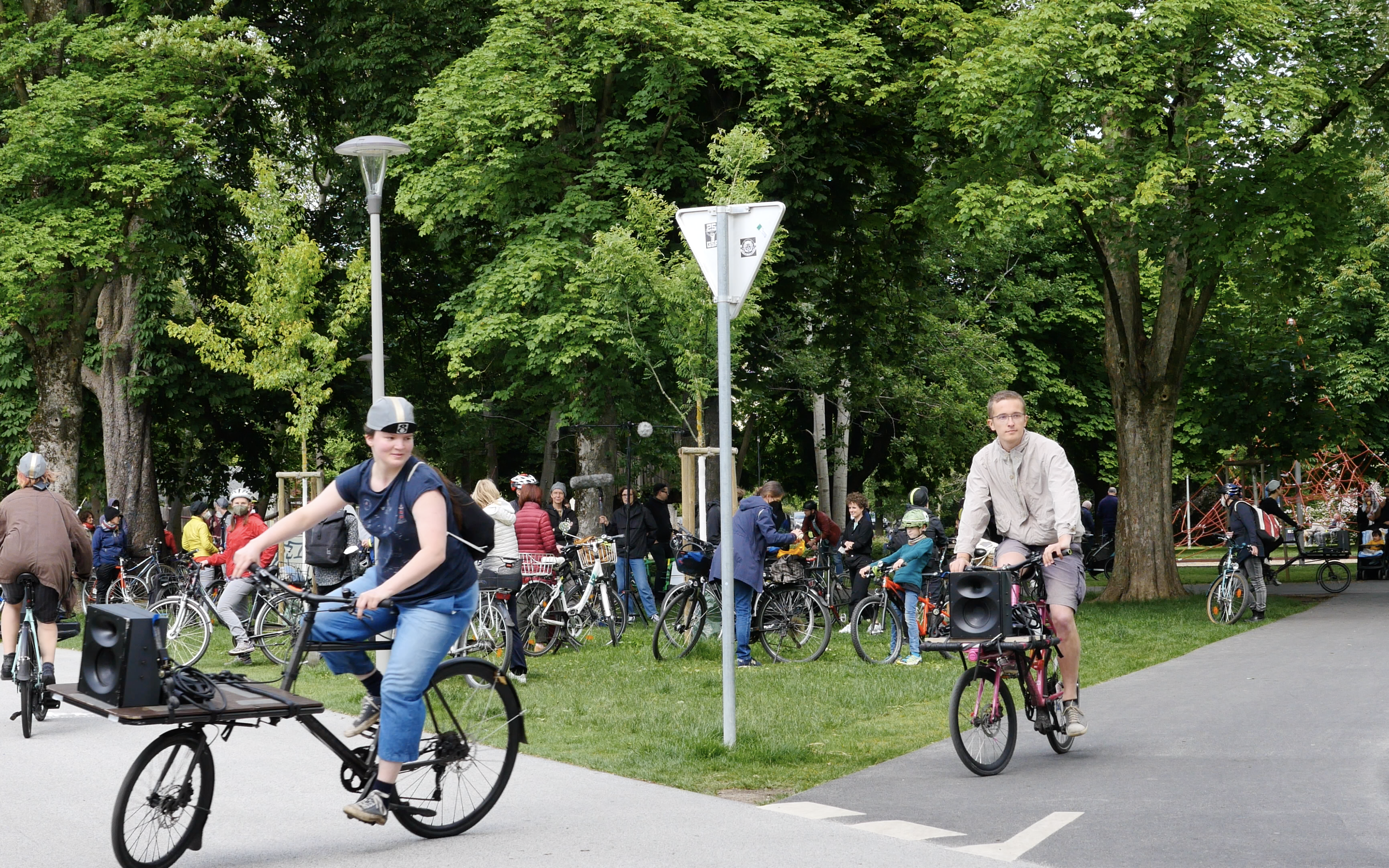
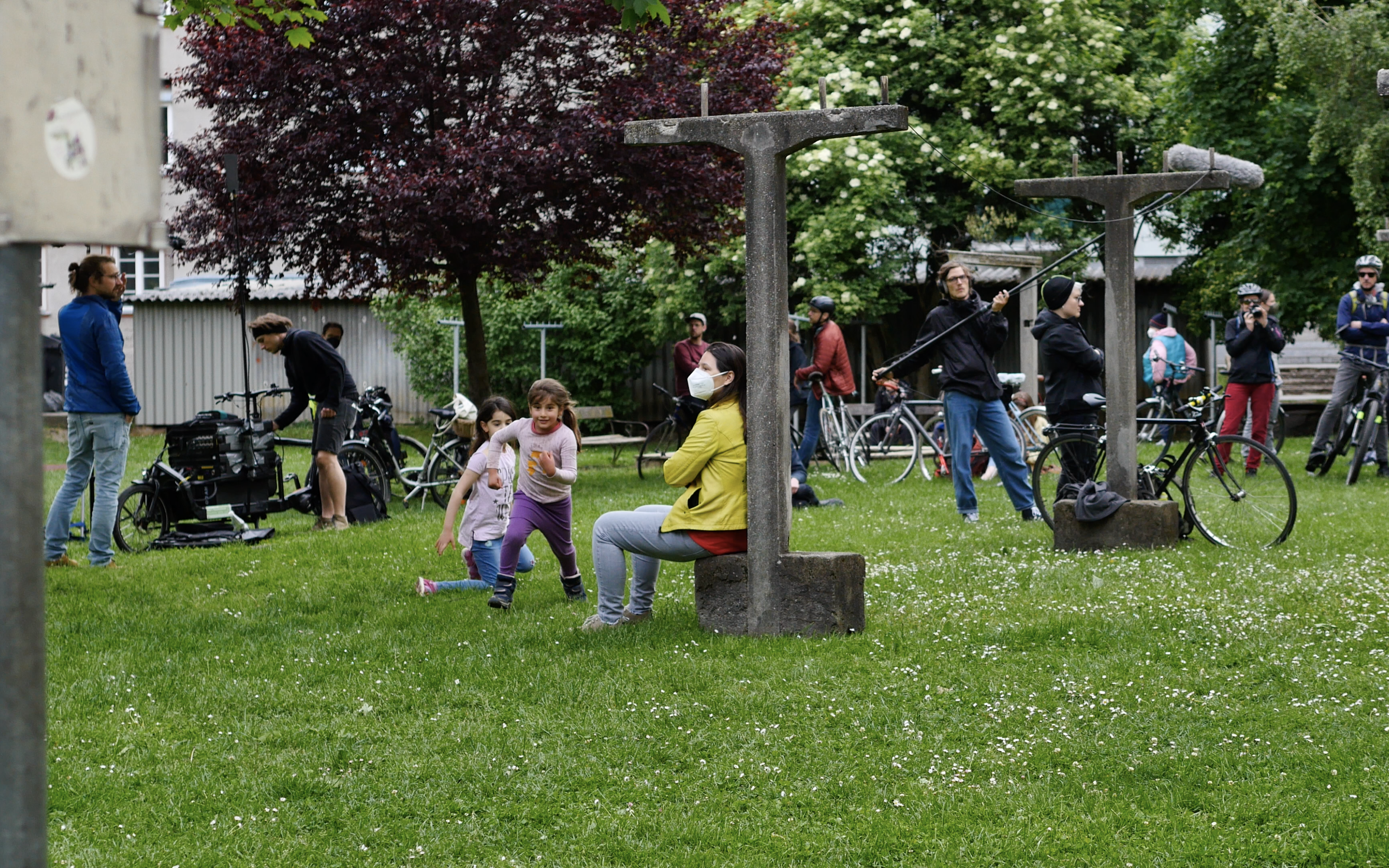
If you could ride the sound waves of your favourite soundtrack, where would it take you? The starting point is the MUWA – Museum of Perception: the Group Ride takes us from the Augarten to the Triestersiedlung to the Schaumbad – Freies Atelier Haus Graz. The first workers‘ settlements on the outskirts of Graz at that time were built along the Triester Strasse, the direct north-south connection of the trade route between Vienna and Trieste. In the 1920s, municipal housing was finally promoted by the mayor Vinzenz Muchitsch. Workers‘ housing estates with extensive green spaces, courtyards and social facilities were built. RAD Performance explores places in circular movements, starting from the centre of Graz, along the Mur to the periphery, thus making urban space experienced in a new way by bicycle.
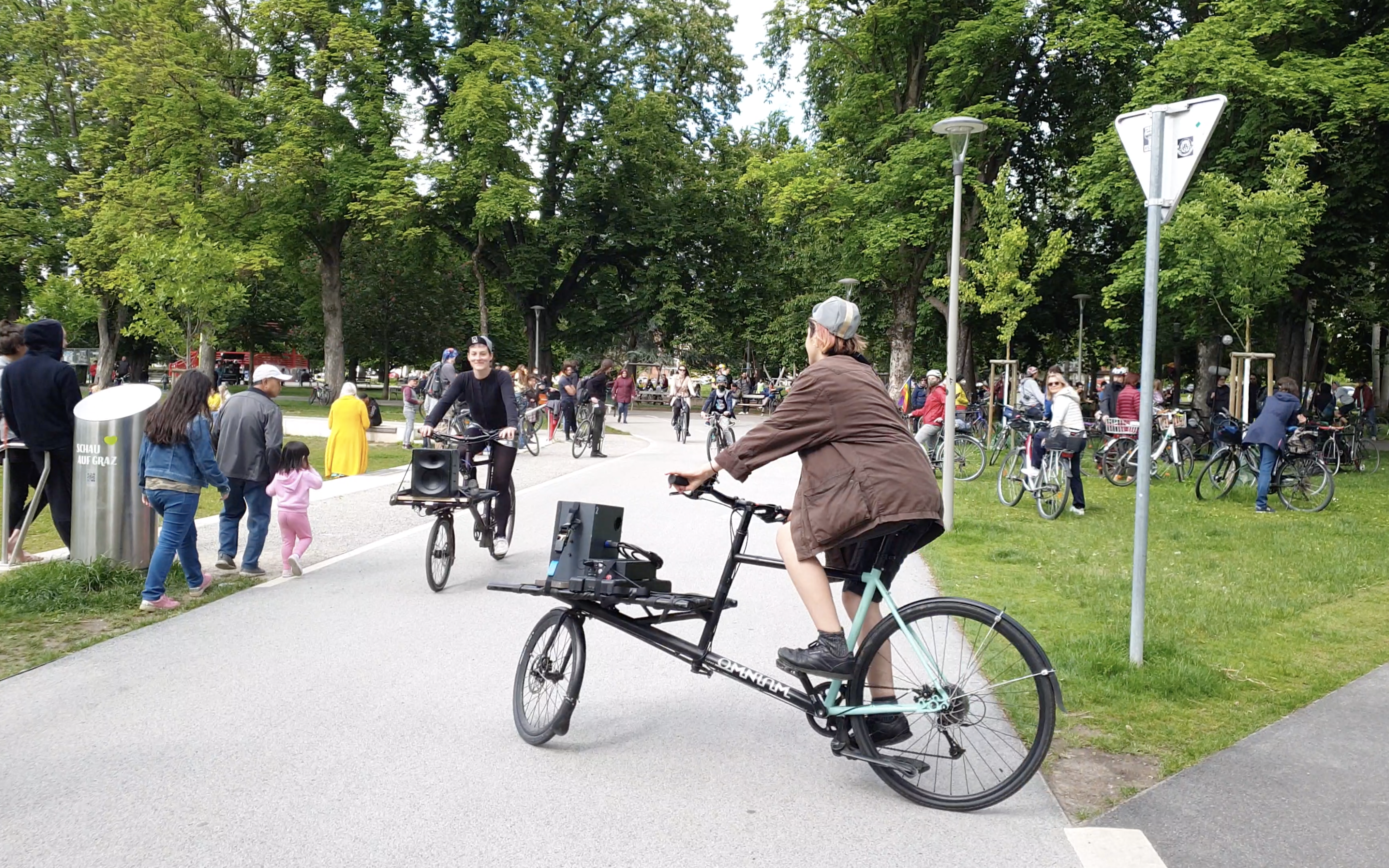
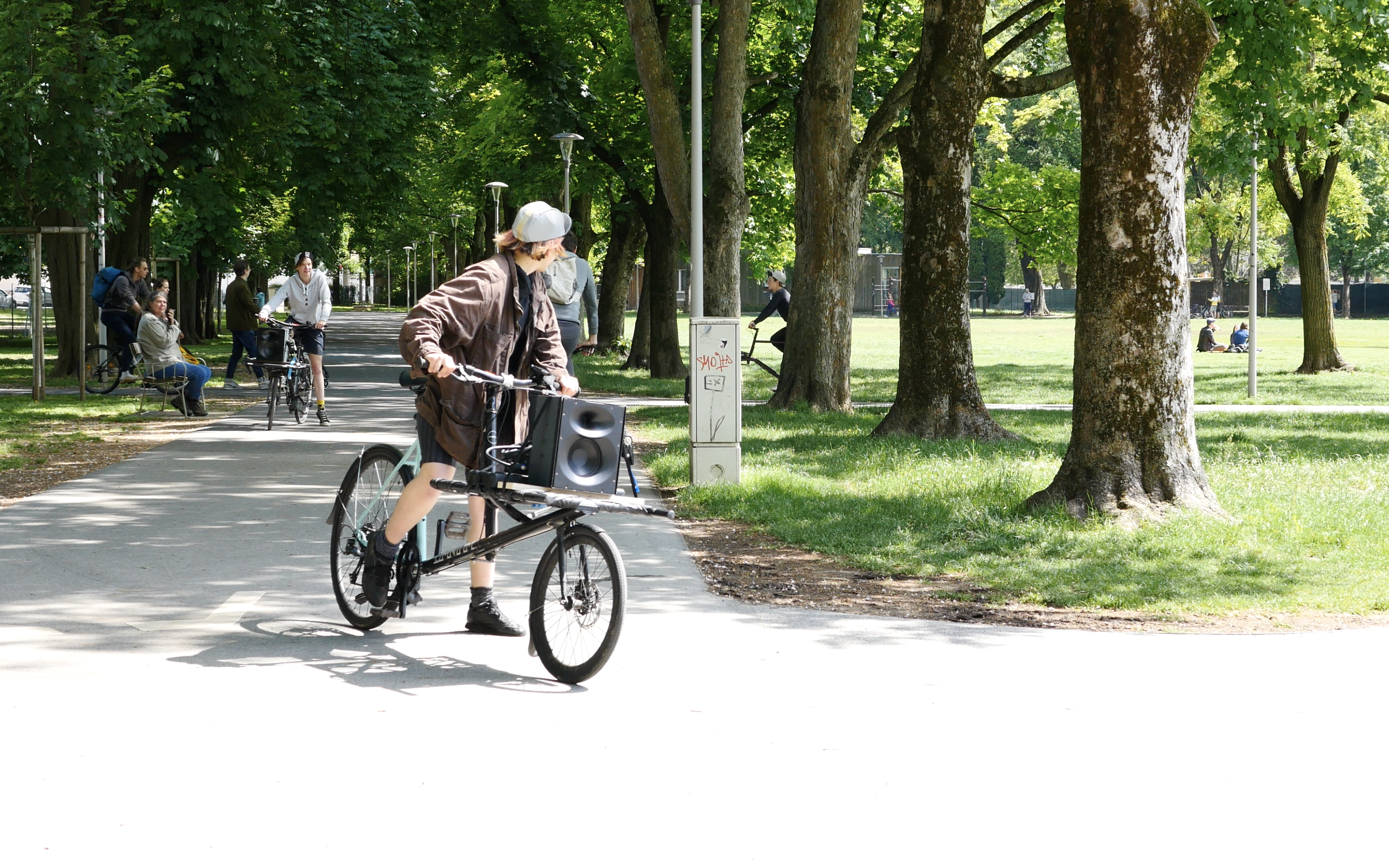
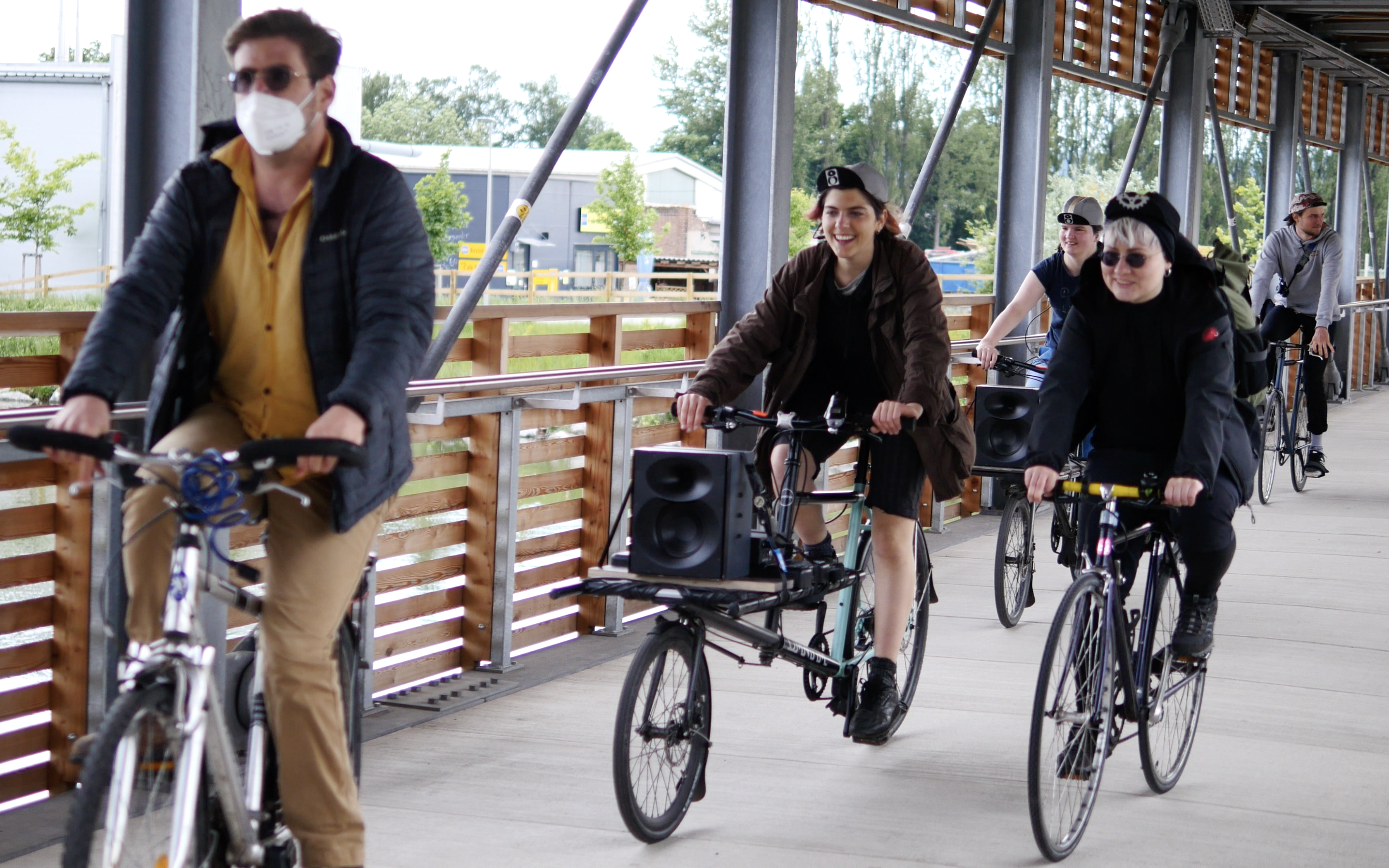
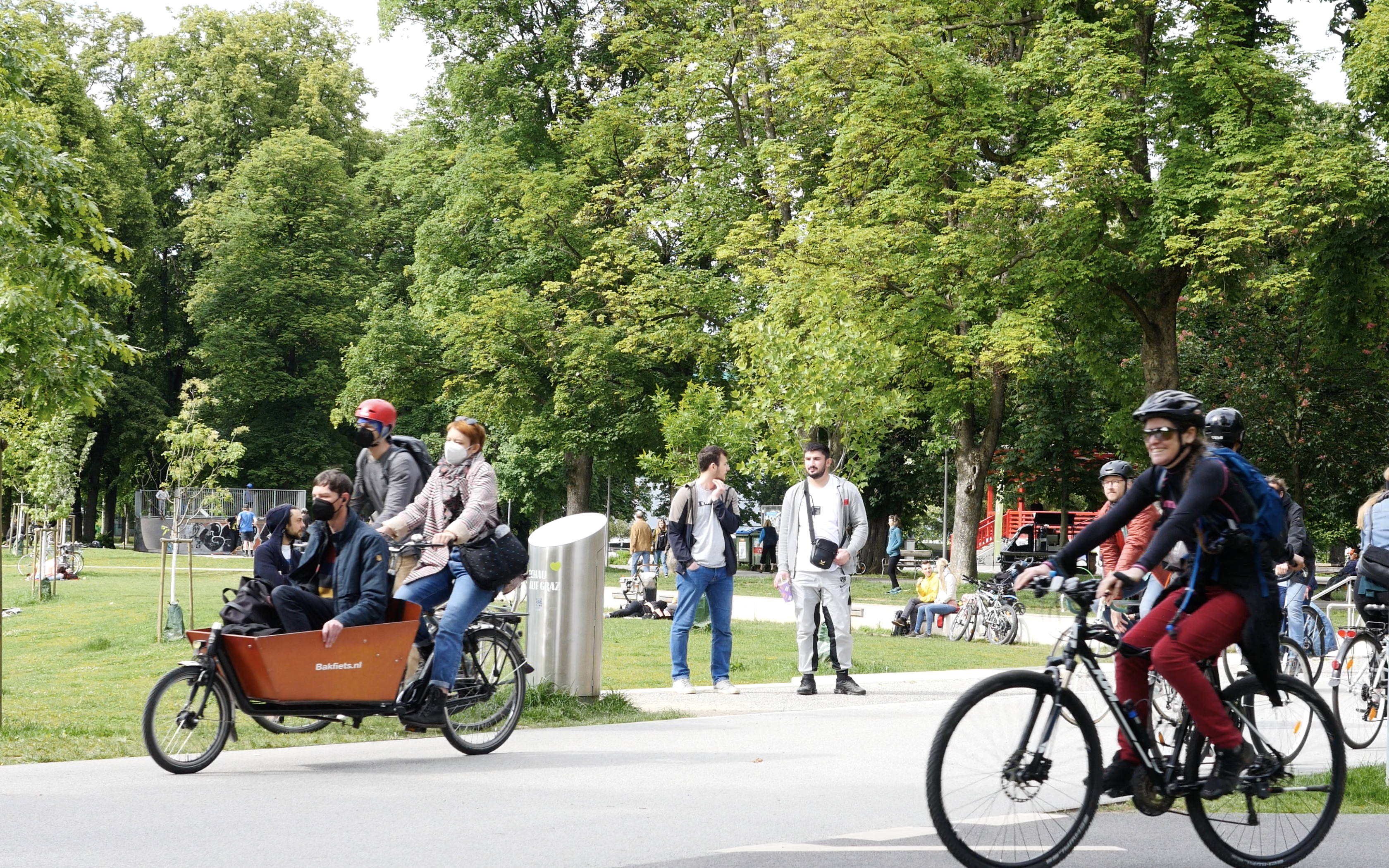
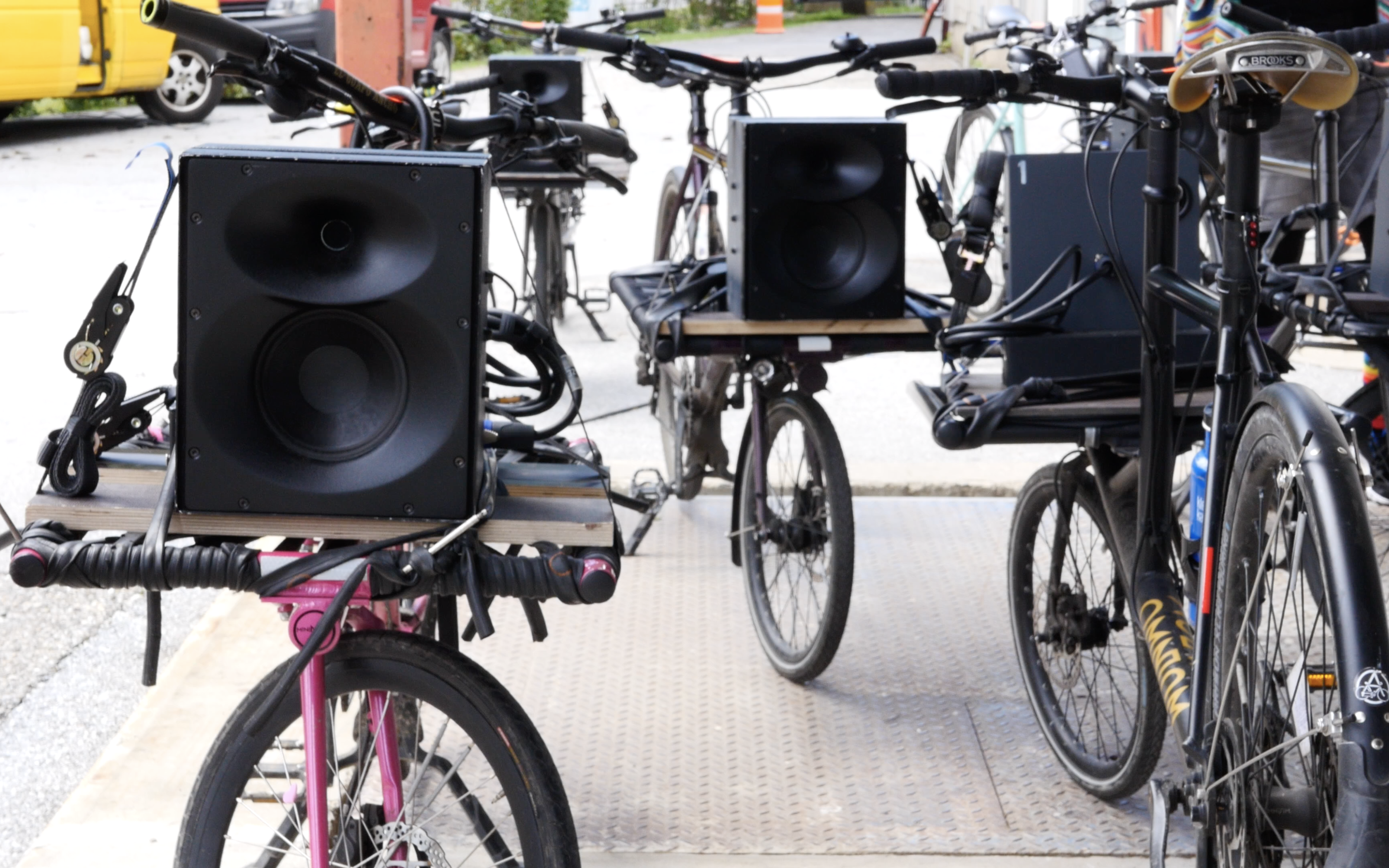
RAD Performance presents concerts on bicycles and sound art with mobile loudspeakers in motion and in the open air. The bicycle becomes the medium for sound art in public space and the inspiration for musical and performative works. For the composition commissions, media artist Conny Zenk will provide field recordings of various places in Graz along the planned route as source material. Thus, for the first time, site-specific compositions conceived as circular movements will be presented. In cooperation with Interstellar Records and chmafu nocords, mixes of the labels will also be heard in the urban space. Equipped as a swarm with mobile PA loudspeakers, RAD Performance moves through the city. The street becomes a stage, the bicycle a sound vehicle, the collective ride a concert.
RAD Performance x open music
Wenn Sie auf den Klangwellen Ihres Lieblings-Soundtracks reiten könnten, wohin würde er Sie bringen? Startpunkt ist das MUWA – Museum der Wahrnehmung: Der Group Ride führt uns vom Augarten in die Triestersiedlung bis zum Schaumbad – Freies Atelier Haus Graz. Die ersten Arbeitersiedlungen am damaligen Stadtrand von Graz entstanden entlang der Triester Straße, der direkten Nord-Süd Verbindung der Handelsroute zwischen Wien und Triest. In den 1920iger Jahren wurde der kommunale Wohnbau durch den Bürgermeister Vinzenz Muchitsch endlich gefördert. Es entstanden Arbeitersiedlungen mit weitläufigen Grünflächen, Innenhöfen und sozialen Einrichtungen. RAD Performance erkundet in kreisenden Bewegungen Orte ausgehend vom Zentrum in Graz, entlang der Mur bis in die Peripherie und macht dadurch den urbanen Raum mit dem Fahrrad auf neue Weise erfahrbar.
RAD Performance präsentiert Konzerte am Fahrrad und Klangkunst mit mobilen Lautsprechern in Bewegung und unter freiem Himmel. Das Fahrrad wird zum Medium für Sound Art im öffentlichen Raum und zur Inspiration für musikalische und performative Werke. Für die Kompositionsaufträge stellt Medienkünstlerin Conny Zenk als Ausgangsmaterial Field Recordings unterschiedlicher Plätze aus Graz entlang der geplanten Route zur Verfügung. Präsentiert werden somit erstmals ortsbezogene, als kreisende Bewegungen konzipierte Kompositionen. In Kooperation mit Interstellar Records und chmafu nocords werden darüber hinaus Mixes der Labels im Stadtraum gehört. Als Schwarm mit mobilen PA Lautsprechern ausgestattet, bewegt sich RAD Performance durch die Stadt. Die Straße wird zur Bühne, das Fahrrad zum Soundvehikel, die kollektive Ausfahrt zum Konzert.
Electrified pulses and vibrations overlay the city as invisible electromagnetic waves. An imperceptible sign of the condensation of the world: the inaudible, the invisible data streams, the wifi signals and digital networks. RAD Performance PHANTOM RIDES describes a bicycle orchestra equipped with cameras, sound modules and self-made antennas to move through the city streets as a chorus of signals.
Phantom Rides, Vienna 2021
Sonic Environment: a choral movement of signals and electromagnetic soundscapes
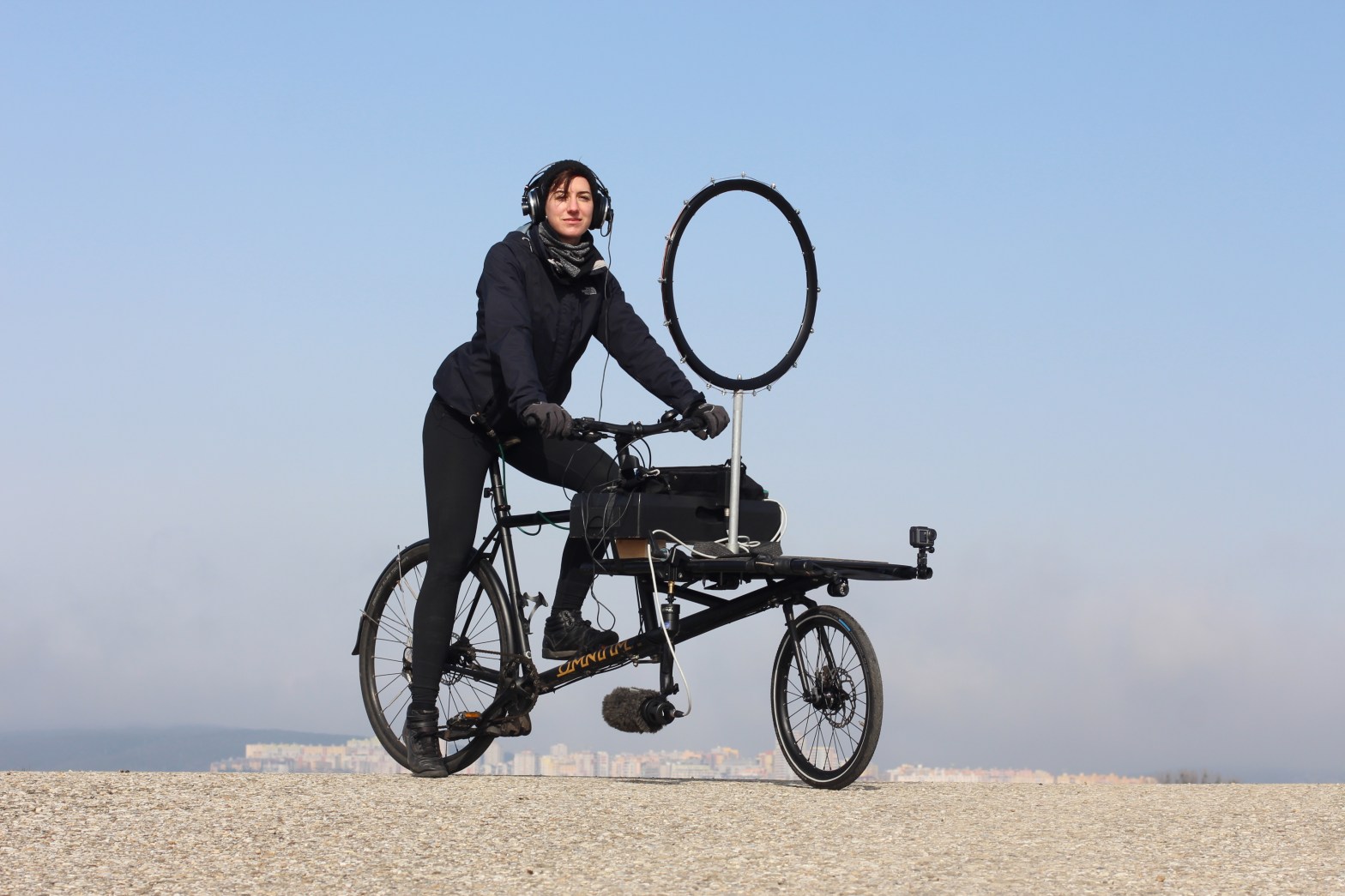
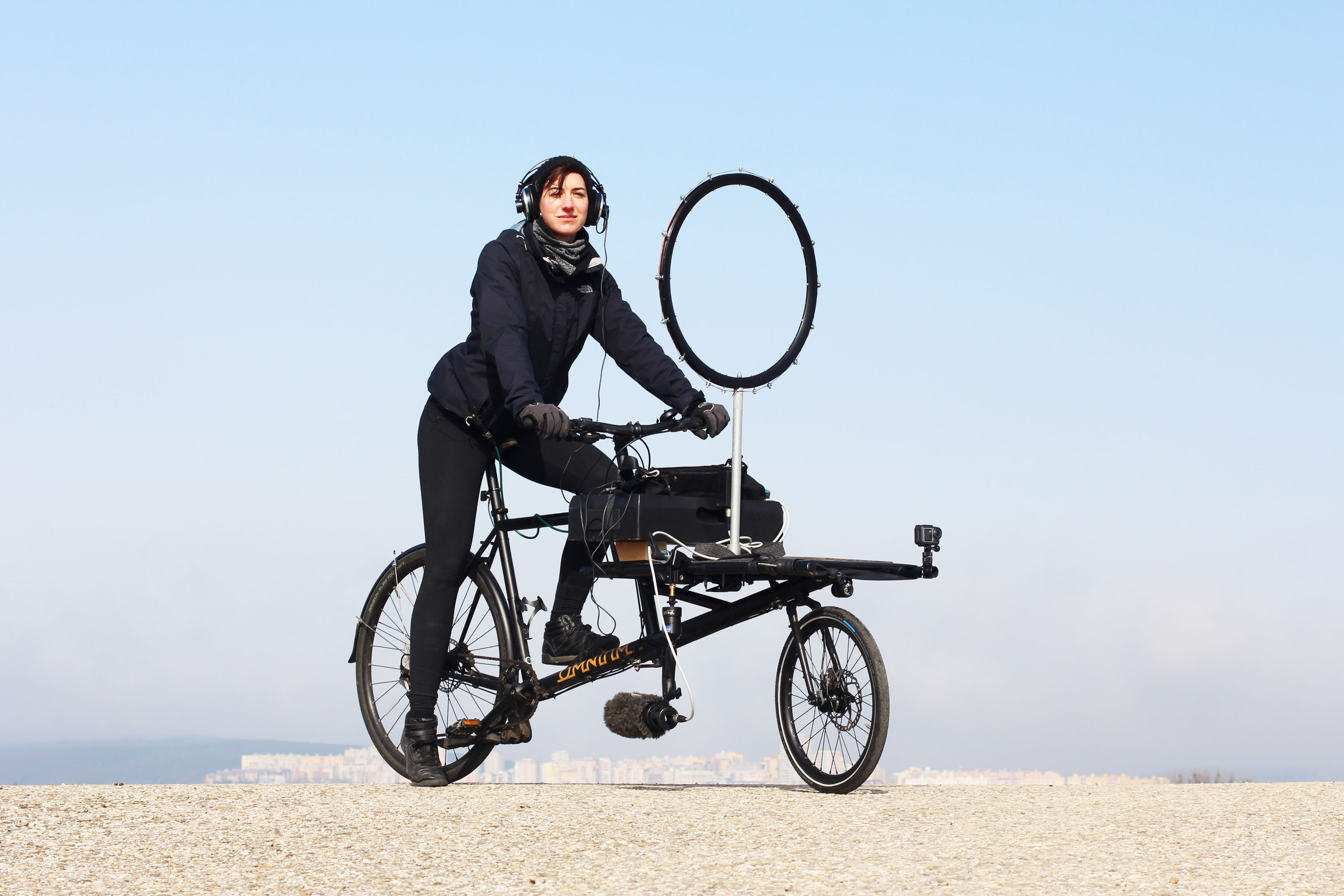
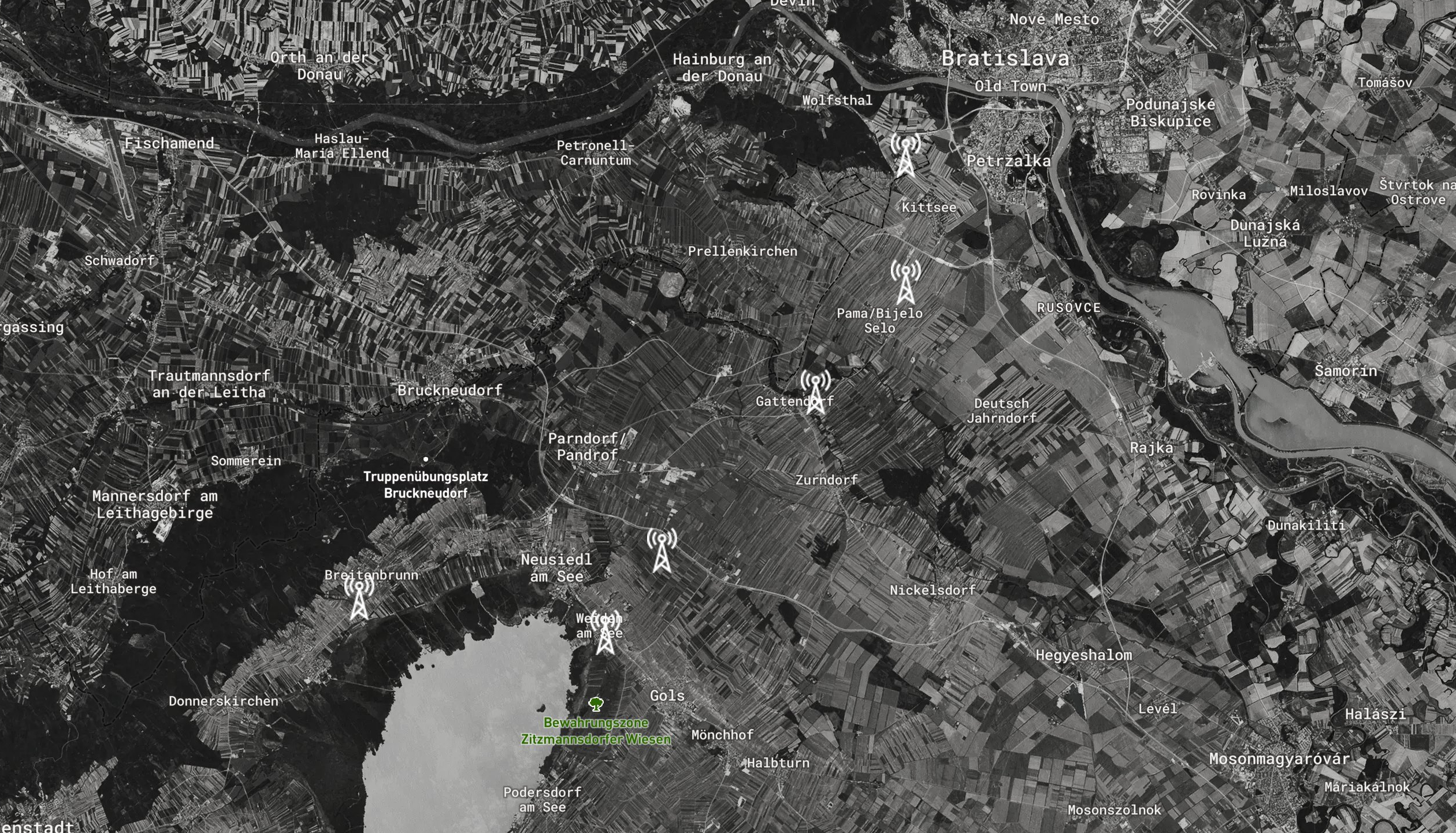
Equipped with different microphones, camera and self-made antenna, field records are created along the R1 jubilee bike path in Burgenland.
PHANTOM RIDES 2021, at the Jubelee Cycle Track close to Zurndorf, Austria
Sonic Environment: eine chorische Bewegung von Signalen, elektromagnetische Soundscapes entlang des R1 Jubiläumsradweg im Burgenland
Elektrifizierte Pulse und Vibrationen überlagern als unsichtbare elektromagnetische Wellen die Landschaft. Ein unmerkliches Zeichen von der Verdichtung der Welt: das Nicht-Hörbare, die Nicht-Sichtbaren Datenströme, die Wifi-Signale und digitalen Netzwerke. RAD Performance PHANTOM RIDES beschreibt eine audio-visuelle Topografie einer mit geisterhaften Wellen durchzogenen Landschaft. Ausgestattet mit unterschiedlichen Mikrofonen, Kamera und selbstgebauter Antenne, entstehen Field Records entlang des R1 Jubiläumsradweg im Burgenland.
PHANTOM RIDES 2021, at the starting point at the Austrian / Slovakian border, near Bratislava
Phantom rides AT THE R1 CYCLE ROUTE IN BURGENLAND / AUSTRIA
AUSTRIAN / SLOVAKIAN BORDER – via Berg – Kittsee – Pama – Zurndorf – Gattendorf – Weiden am See – Neusiedl am See – Jois – Winden am See – Breitenbrunn – Purbach
PHANTOM RIDES 2021, Am Startpunkt an der slowakischen Grenze / nähe Bratislava
Different microphones and logarithmic-periodic high-frequency and DIY antennas are mounted on the bicycle. The electromagnetic signals are superimposed with the recordings while riding. The result is a site-specific, audio-visual composition along the path and the duration of the route. The invisible is made audible, not only bicycles, trains and cars draw their lines through the landscape, but also the soundscapes of electrified signals and data streams.
The Jubilee Cycle Route starts at the Slovakian border. On the horizon you can already see the nearby capital Bratislava. My first tour leads directly at the border to Berg. The landscape seems quiet and empty, but signals are buzzing in the ether. By means of a self-made antenna for the bicycle I can listen into the digital environment of the R1 cycle track. The overlay of the recorded sounds while riding with those of the digital data streams create a unique soundtrack for the route. The R1 Jubilee Cycle Route was opened 20 years ago now, on the occasion of the 80th anniversary of Burgenland and connects along the Slovak, Hungarian and Slovenian borders the north / south axis. In the airspace of signals, the state borders become blurred.
PHANTOM RIDES 2021, entlang des R1 Jubiläumsradweg – zwischen Neusiedl am See und Jois
Am Fahrrad sind unterschiedliche Mikrofone und logarithmisch-periodische Hochfrequenz- sowie selbstgebaute Antennen, montiert. Überlagert werden die elektromagnetischen Signale mit den Aufnahmen während des Fahrens. Es entsteht eine ortsbezogene, audio-visuelle Komposition entlang des Weges und der Dauer der Strecke. Unsichtbares wird hörbar gemacht, durch die Landschaft ziehen nicht nur Fahrräder, Züge und Autos ihre Linien, sondern auch die Soundscapes elektrifizierter Signale und Datenströme.
Der Jubiläumsradweg startet an der slowakischen Grenze. Am Horizont sieht man bereits die nahe gelegene Hauptstadt Bratislava. Meine erste Tour führt direkt an der Grenze nach Berg. Die Landschaft scheint ruhig und menschenleer, doch im Äther schwirren die Signale. Mittels selbstgebauter Antenne für das Fahrrad kann ich in die digitale Aktivität der Umgebung hören. Die Überlagerung der aufgenommen Klänge während dem Fahren mit jenen der digitalen Datenströme erzeugen einen einzigartigen Soundtrack für die Route. Der R1 Jubiläumsradweg wurde vor mittlerweile 20 Jahren, zum 80-jährigen Jubiläum des Burgenlands eröffnet und verbindet entlang der slowakischen, ungarischen und slowenischen Grenzen die Nord-/ Süd-Achse im Burgenland. Im Luftraum der Signale verschwimmen die staatlichen Grenzen.
PHANTOM RIDES, 2021 – various recordings online via velakradar
Online Streaming via velakradar: http://velakradar.klingt.org/ velakradar is an online platform for non concert audio
PHANTOM RIDES 2021, entlang des R1 Jubiläumsradweg
Anläßlich des „Science in the City Festival – ESOF Trieste capitale europea della scienza 2020“ hat das Wiener Kollektiv für Neue Musik „cantierezero“ (www.cantierezero.org) , eine Veranstaltungsreihe unter dem Titel „Teatri del suono//Chaos“ organisiert. Im Rahmen dieser Reihe, die neben musikalischen auch philosophische und wissenschaftliche Aspekte einbezieht, wird das Musikprojekt “pianimal” erstmals der Öffentlichkeit präsentiert. Konzept und Komposition stammen von Katharina Klement, Musikvisualisierung und filmische Arbeit von Conny Zenk (die zuletzt auch am KF London ein Projekt realisierte). Musiker_innen von „cantierezero“, das über ein Standbein in Triest verfügt, werden an dieser Uraufführung mitwirken. Interessant an diesem Werk ist, dass es entfernte „akustische Stationen“, die an verschiedenen Orten Triests errichtet werden sollen, einbezieht, von denen aus die Aufführung und anderes Tonmaterial gehört bzw. gesehen werden kann.
Sonic Environment and Sound Art – a choral movement with loudspeakers
RAD Performance CITY OF NOISE presents a new composition format for the bicycle realized in motion and with a variety of mobile speakers and wheels. The experimental field is called Sonic Environment and Sound Research. Fixed-media compositions of different sound artists, the choral movement of the performers on the bicycle as well as the dynamics and distance between the moving sound sources create unique soundscapes for the audience.
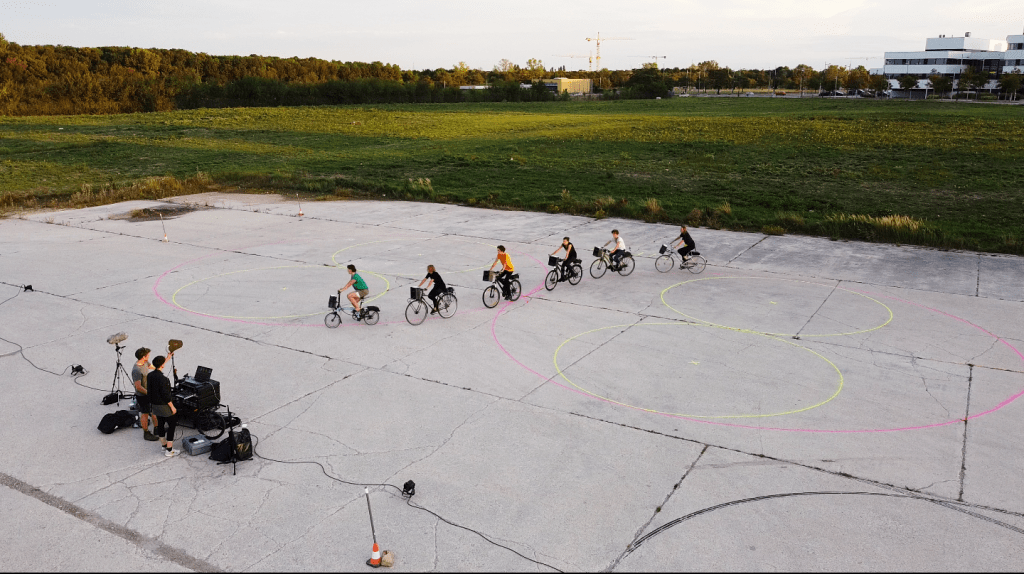
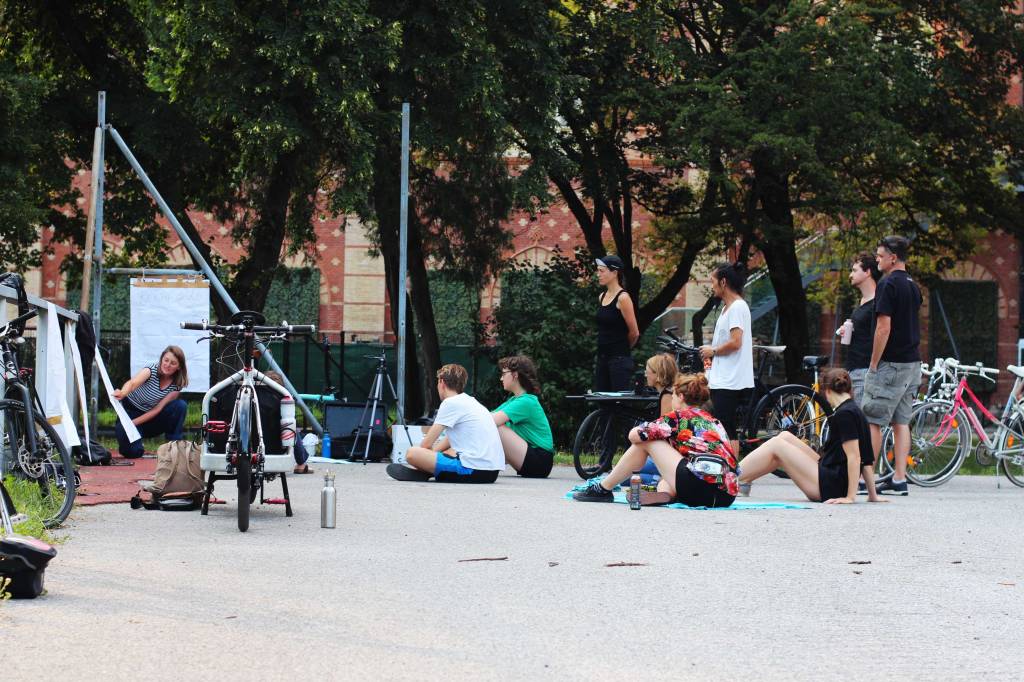
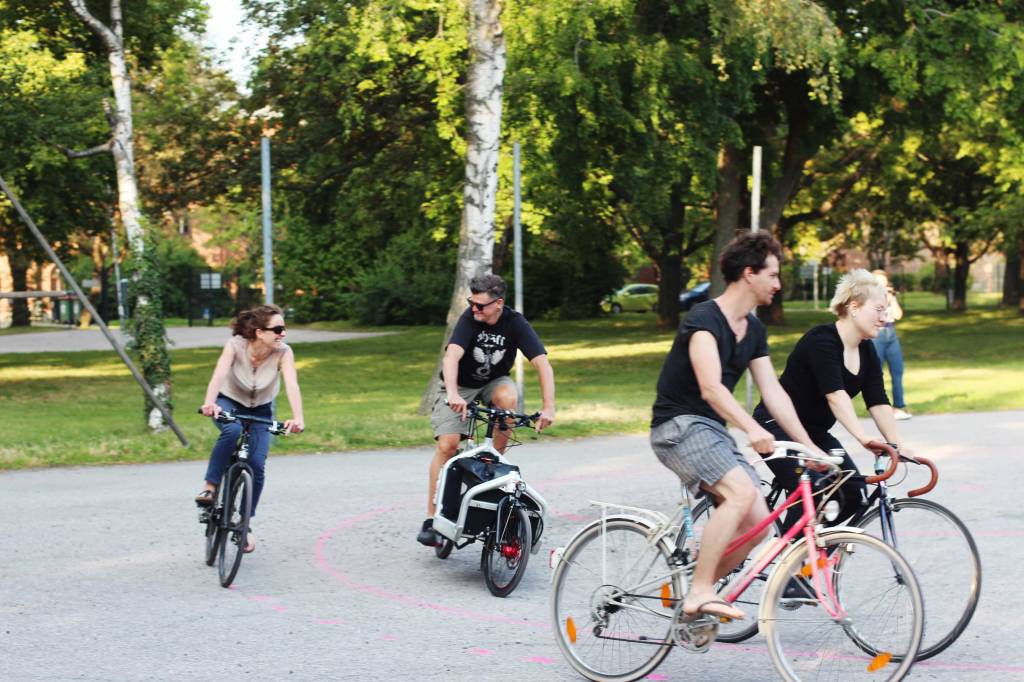
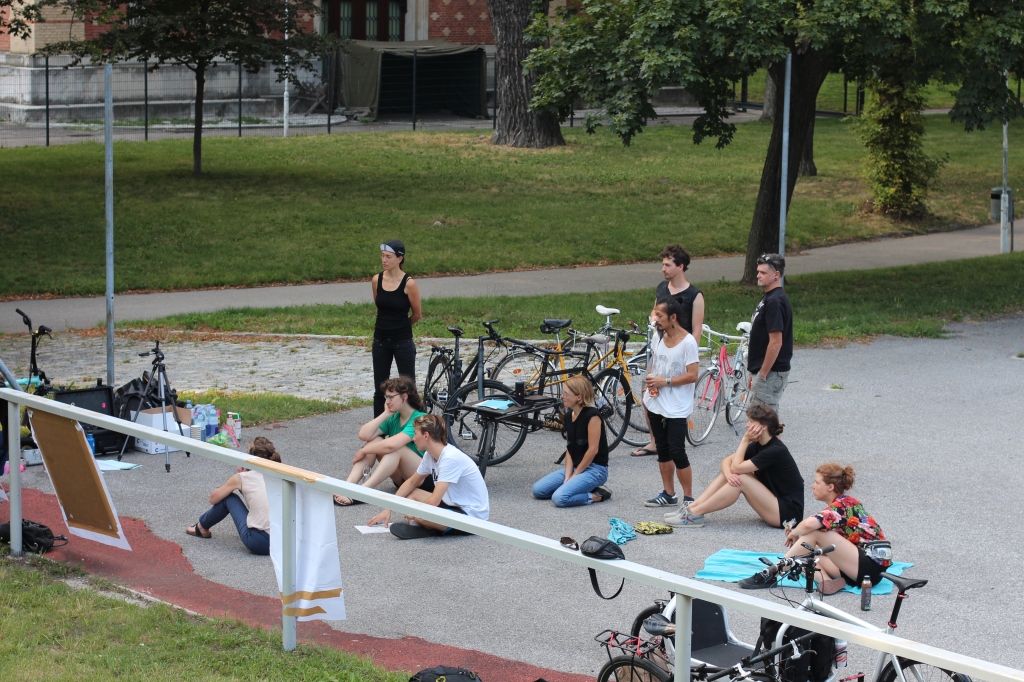
RAD Performance CITY OF NOISE stellt Konzerte aus dem Feld der Elektronik und Experimentalmusik ins Zentrum der künstlerischen Auseinandersetzung und präsentiert, komponiert und spielt sie unterwegs. Das Fahrrad wird zum Medium für experimentelle Soundformate in Bewegung und als Inspiration für musikalische und performative Werke. Unterschiedliche Orte und Bezirke werden befahren und die Stadt selbst wird zur Bühne. Das Fahrrad ist Vehikel, Instrument und Akteure zugleich. In einem über mehrere Monate angelegten Programm finden Veranstaltungen performativer Konzerte am Fahrrad mit einem Fokus auf experimentelle elektronische und elektroakustische Musik statt. Die Konzerte finden entlang von Radstrecken, sehr oft auch in Außenbezirken der Stadt Wien statt, bei denen die Besucher*innen mit mobilen PA Lautsprecher ausgestattet werden. RAD Performance CITY OF NOISE macht dadurch den urbanen Raum der Stadt Wien auf neue Weise mit dem Fahrrad erfahrbar.
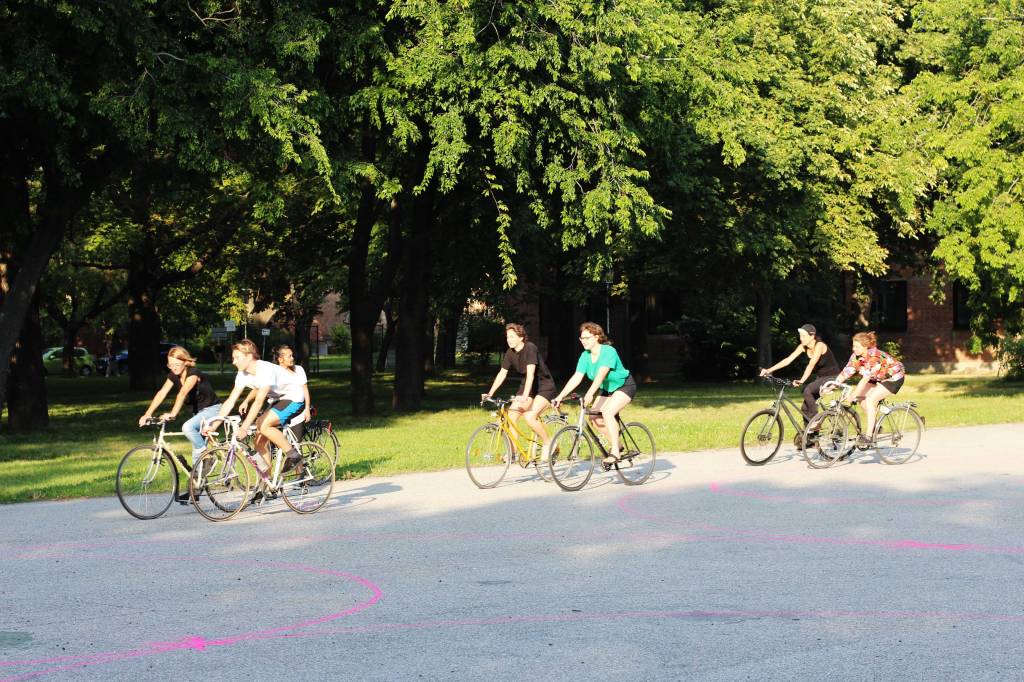
Start- und Endpunkte der Route bestimmen die Dauer der Komposition: Straßen und Bezirke werden ebenso Teil der Performance, wie auch die Orte zu denen sich das Publikum hinbewegt. Unterschiedliche musikalische und performative Konzepte werden im Rahmen CITY OF NOISE präsentiert: Eine Choreographie entsteht, die sich durch die wechselnden Positionen der Radfahrer*innen konsequent im Raum verändert, durch die Stadt bewegt und den Raum dynamisch integriert.
Das künstlerische Team bestehend aus Medienkünstlerin Conny Zenk, Radreigen-Expertin Petra Sturm und Komponistin Veronika Mayer transformiert Zeichnungen bzw. grafische Formationen zum Radreigen* in klangliche Partituren. *Radreigen war eine um die Jahrhundertwende populäre Radkulturform, in der Tanz-, Turn- und Paradeelemente mit dem Rad umgesetzt wurden. Ausgeübt wurde das Reigenfahren u.a. in Turnhallen oder auf Plätzen in ganz Wien. Originale Skizzen und Zeichnungen von Radreigenanordnungen werden auf ihre musikalischen Spielbarkeiten untersucht und sind das Ausgangsmaterial für eine grafische Notation. Im Projekt wird eine Übersetzung dieser Formationselemente in experimentelle und elektroakustische Musik versucht. Formale und lineare Strukturen wirken in die Musik ein und umgekehrt, als Transmissionsvehikel für diesen Prozess dient das Fahrrad. Das relationale Spiel mit Körpern, Formationen, Routen, Rädern und Musik ergibt eine eigene visuell-akustische Choreographie.
Im Rahmen des Artistic Research Pilot der Universität für Musik und darstellende Kunst Wien. Unterstützt durch KÖR – Kunst im öffentlichen Raum und das BMKOES.
Artistic Direction: Conny Zenk Choreography: Petra Sturm Sound-Lab: Conny Zenk, Rahel Kraft, Gloria Amesbauer, Konstantin Kuzmanovski RAD Performers*: Arik Kofranek, Ina Hoheisel, Judith Pirklbauer, Silvia Poglitsch, Elizabeth Spouse, Elena Tiis, Ingrid Wollinger, Christian Daschek, Elena Floriani
Technical Direction: Georg Hartl Video Documentation / Drone: Ioana Tarchila Photography: Nguyen Van Cuong Sound Documentation: Rahel Kraft, Conny Zenk Electronic Engineering: Simon Laburda, Aryan Yalefaar
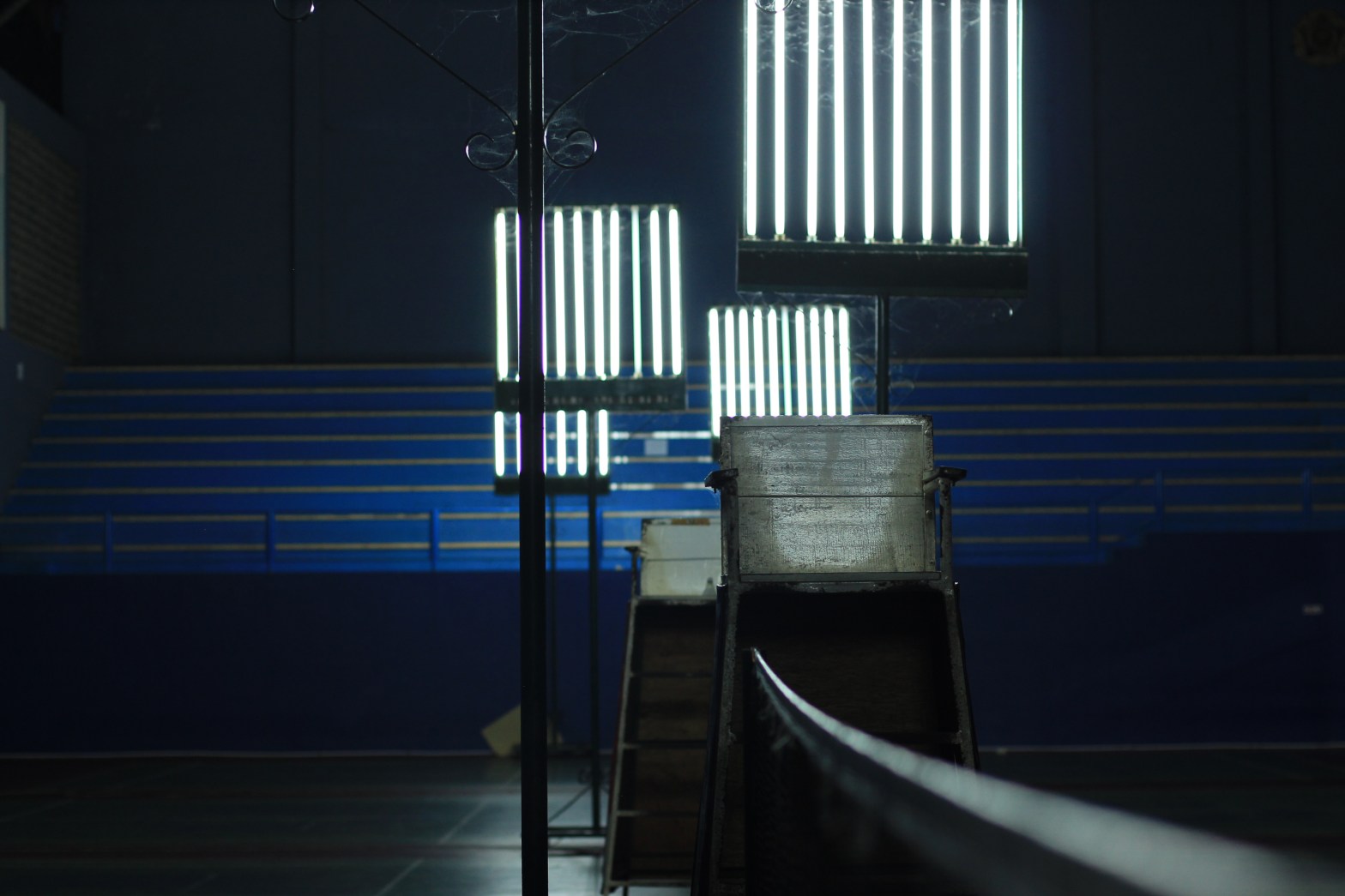
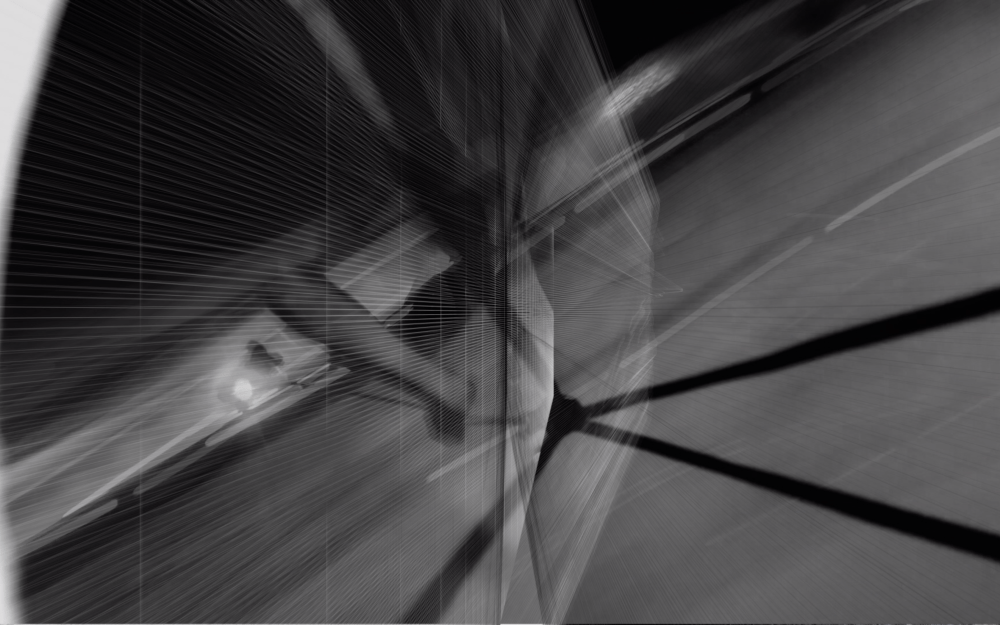
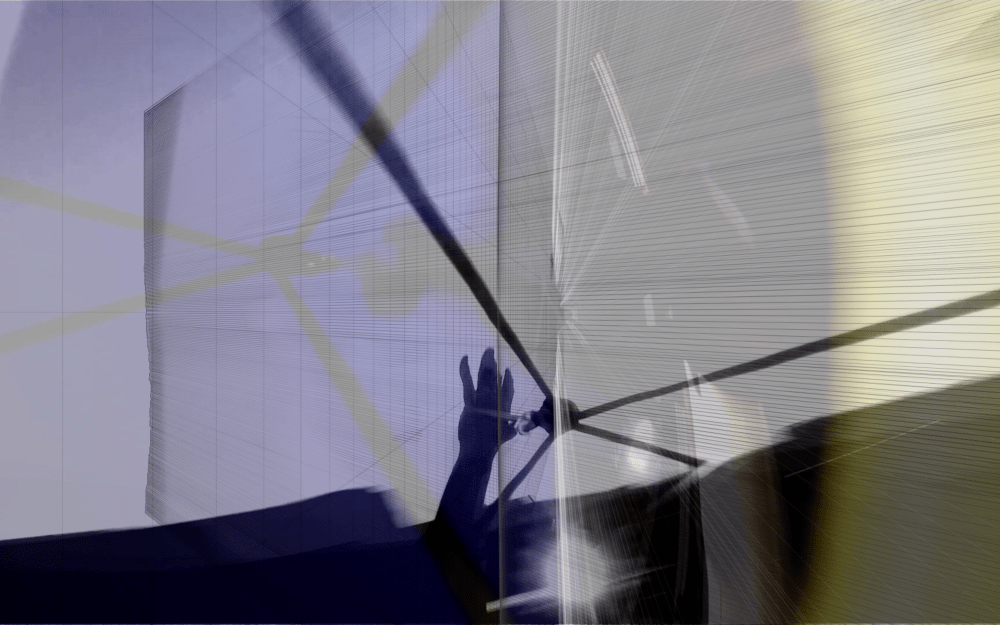
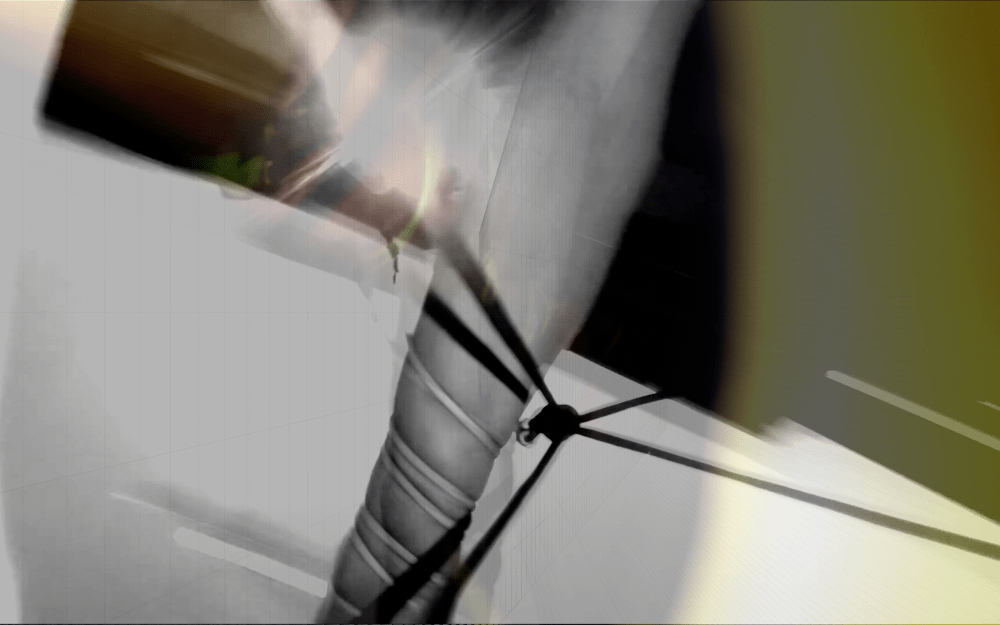
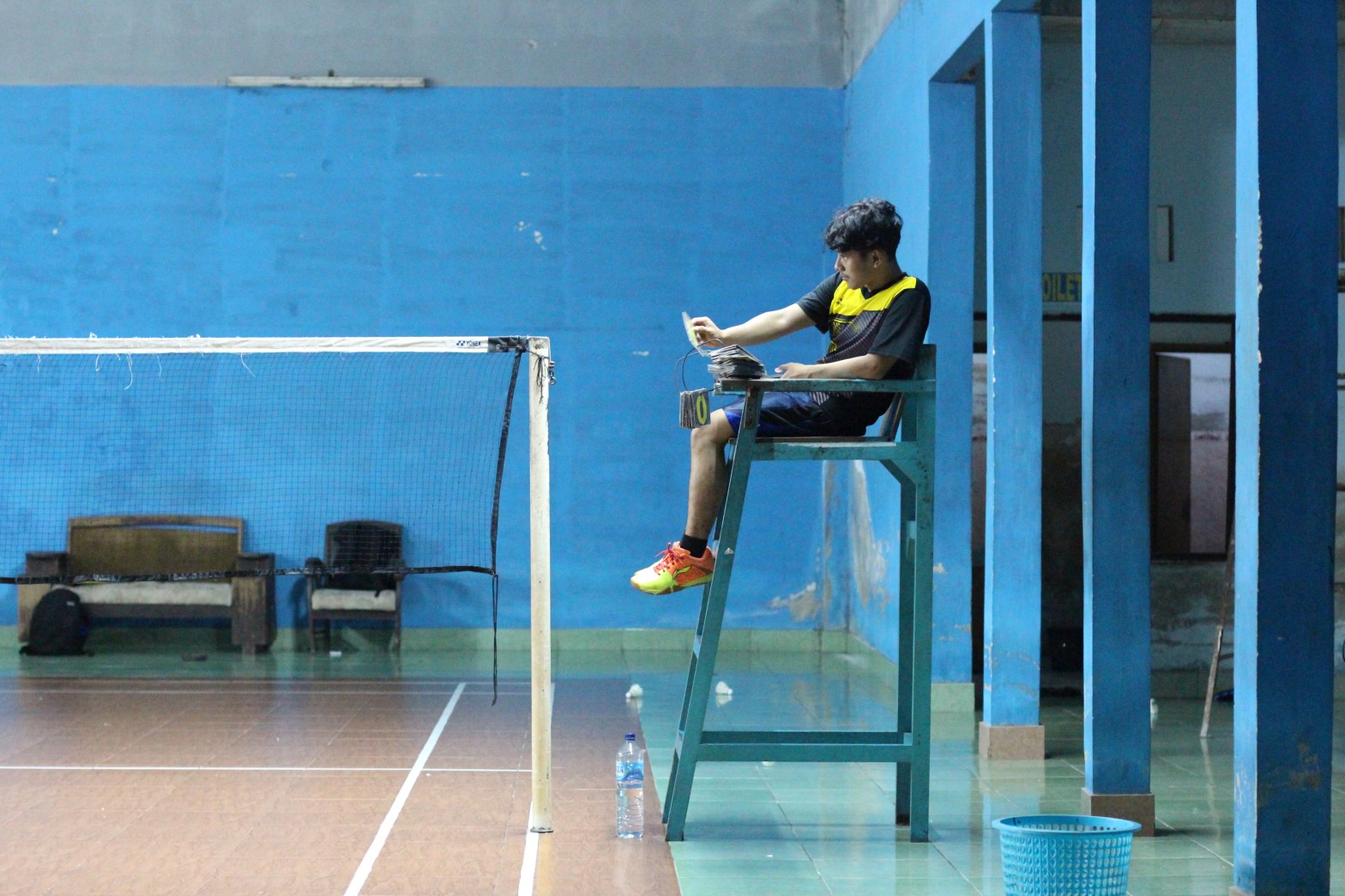
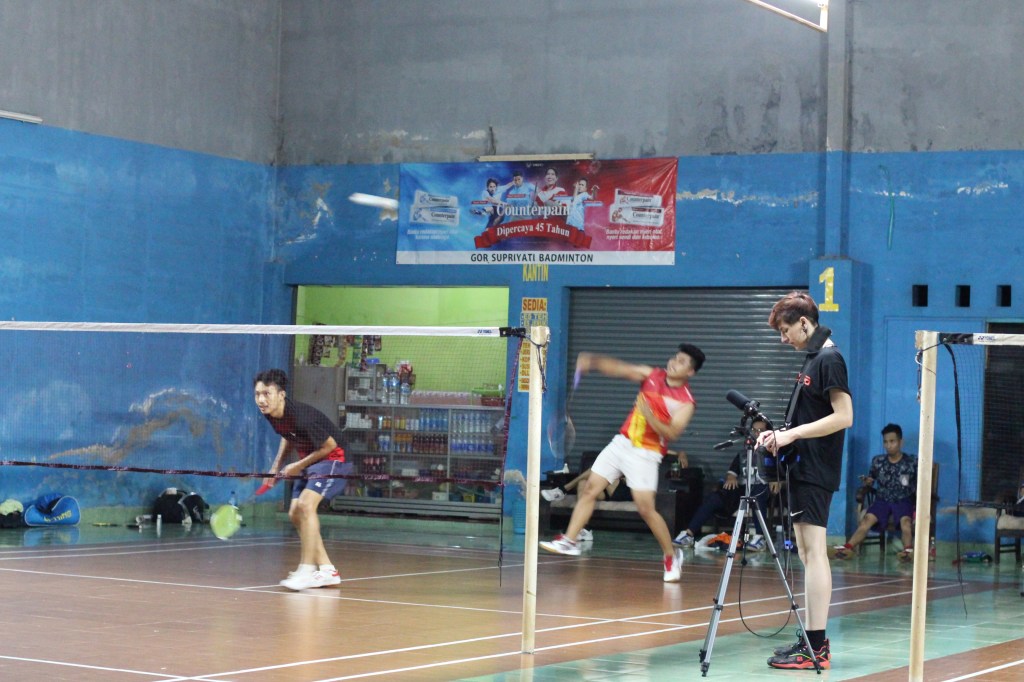
Jogja Badminton Noise beschreibt eine akustische Reise durch verschiedene Sporthallen in Jogjakarta, Indonesien. Mittels 4-Kanal Setup wird ein Spielfeld aus zwei Spielpaaren (als Doppel) nachempfunden.
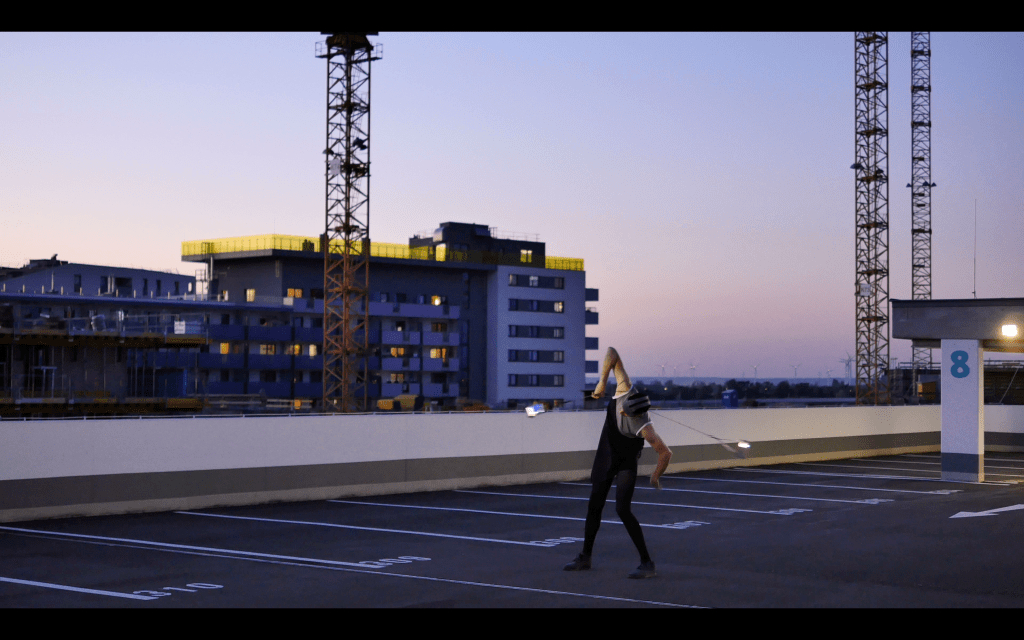
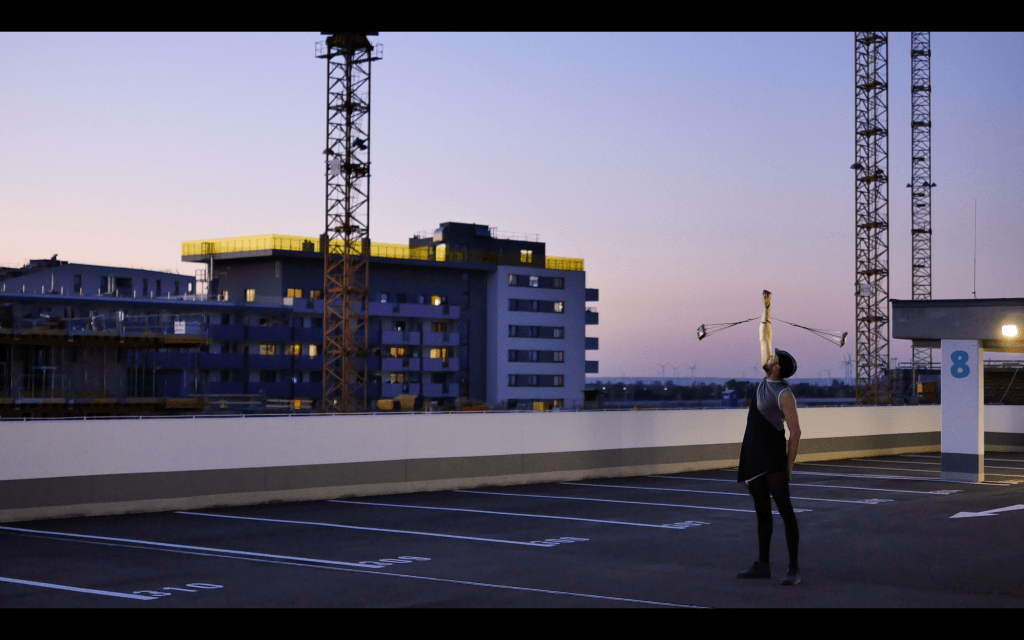
selfieDREAMER taucht ein in einen sinnlichen Umgang von Raum und Zeit geprägt von der Performanz der Medien. Es werden Apparate verwendet, die viel mehr an Alltagsobjekte als an Jonglierinstrumente erinnern. Wenn wir schlafen verändern sich unsere Sinne, Träume wiederholen sich, wir verarbeiten Dinge die wir gesehen haben und Orte die wir erlebt haben. “ … der Schlaf selbst ist Rhythmus, Regelmäßigkeit und Wiederholung” (Jean-Luc Nancy, Vom Schlaf)
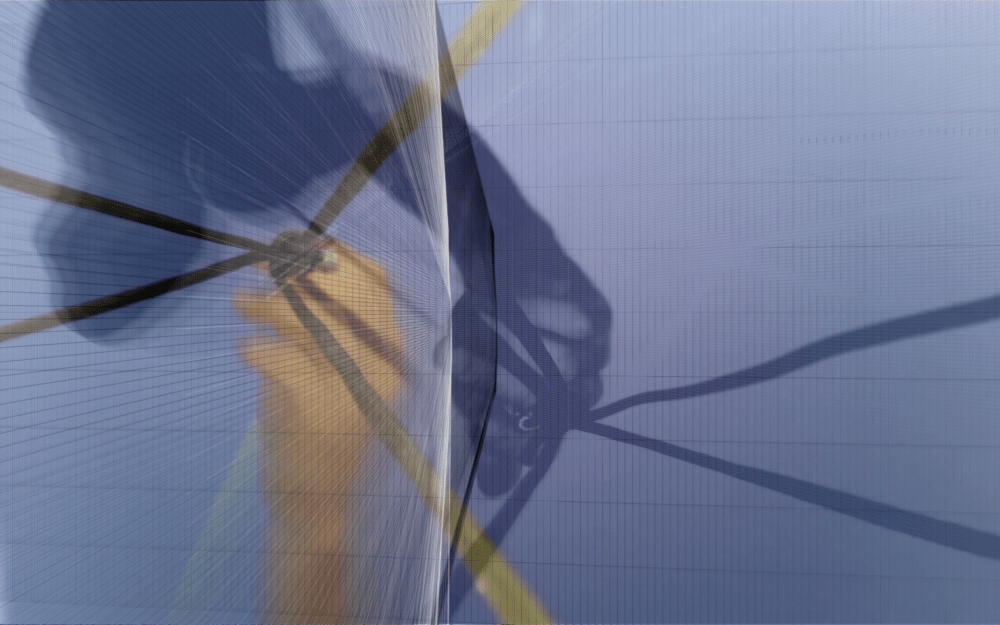
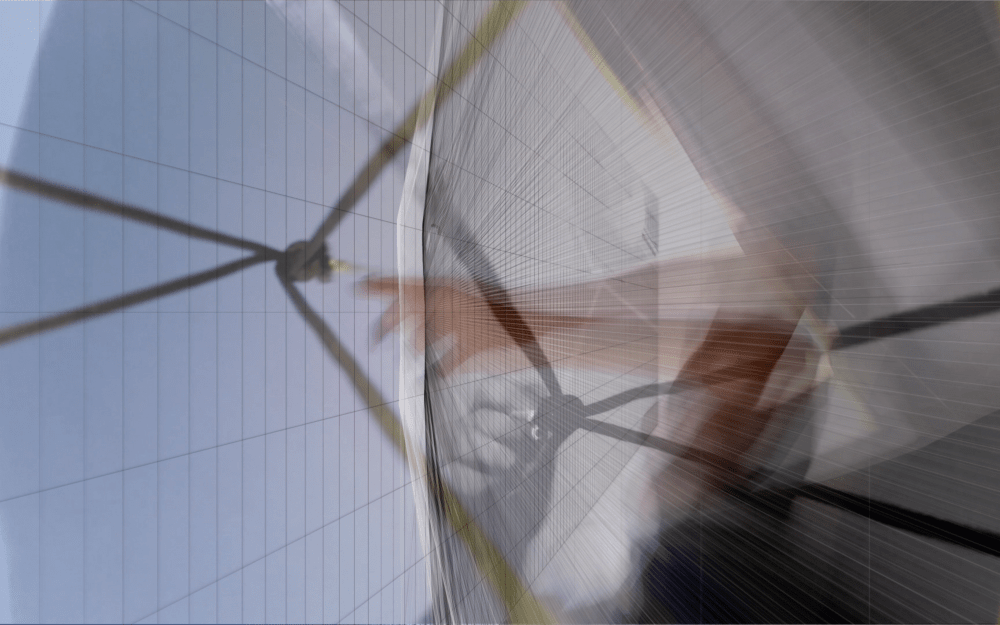
Mit Hilfe von Selfie-Stangen und eigens entworfenen Selfie-Apparaturen wird das Smartphone zum audiovisuellen Instrument. Die kinematische Bewegung der Kamera wird mit einem für Smartphones adaptieren “Meteor” erzeugt, ein bekanntes Requisit aus dem zeitgenössischen Zirkus im Bereich Objektmanipulation. Digitale Geräte werden immer mehr zu einem Orakel, einem Speicher unserer Wünsche und Sehnsüchte. Wir berühren sie zärtlich, streichen sanft über ihre Screens, lachen und weinen in sie hinein. Im Film selfieDREAMER finden Visuelles und Auditives eine gemeinsame Sprache, deutlich wird das durch Entsprechungen in gestaltetem Ton und Bild in Bezug auf Direktheit, Verfremdung und Distanz, durch ein gemeinsames Tempo in Bild- und Tonvariation und -manipulation, aber auch durch eine konstruktive Verarbeitung von Bewegung, Bild und sensorischer Bewegungsanalyse am Smartphone.
Making of selfie DREAMER, 2020, Credit: Ioana Tarchila
selfieDREAMER immerses itself in the sensual handling of space and time characterised by the performance of the media. Apparatuses are used that are much more reminiscent of everyday objects than juggling instruments. When we sleep our senses change, dreams repeat, we process things we have seen and places we have experienced. “… sleep itself is rhythm, regularity and repetition” (Jean-Luc Nancy, The Fall of Sleep)
The focus of the movements is in the field of object manipulation. With the help of selfie sticks and specially designed selfie appliances, the smartphone becomes an audio-visual instrument. Digital devices are increasingly becoming an oracle, a store of our desires and longings. We touch them tenderly, gently stroke their screens, laugh and cry into them. In the film selfieDREAMER, the visual and auditory find a common language, which is illustrated by correspondence in the form of tone and image, in terms of immediacy, alienation and distance, by a common tempo in image and sound variation and manipulation, but also by a common constructive processing of motion, image and sensory motion analysis on the smartphone.
Making of selfie DREAMER, 2020, Credit: Ioana Tarchila
Experimental Animation // selfie DREAMER production year: 2020 length: 12:29 min Digital, 16:9 – 4K, 3840 × 2160px
Regie & Animation: Conny Zenk Performance, Object Manipulation: Markus Liszt Sound: Veronika Mayer
In February 2020 I had the chance to attend a one month artist residency in Jogjakarta, Indonesia. Reading a lot about the city and especially its Electronic Noise Music scene, I was very much looking forward to explore new soundscapes. For this journey I brought a DIY antenna made out of a badminton racket, an OC818 microphone by Austrian Audio and an action camera to record sounds and capture videos in different badminton halls and sports courts. My idea was to engage with various people and communities in Jogjakarta, not just from the arts field to get to know more about social and political issues within this city. Could it be that (badminton) sport offers a place where people meet and connect without questioning social backgrounds, religions, etc and where a community building culture exists besides the capitalist order?
Gor UGM – Jogjakarta
I talked to many different people and did some interviews but mainly I was focusing on the different soundscapes and noises of badminton halls. As it was raining season it was a very specific and very noisy experience. Badminton gymnasiums can be found in any imaginable size in Jogjakarta. I found myself very often standing underneath a roof of white noise, being sure to understand better why there is such a brilliant “Noise Music Scene” in Jogjakarta. Heavy rain was falling onto mainly iron roofs and the acoustic of the gymnasiums quite often changed dramatically. I did many recordings in hypercardioid and cardioid mode from a very close distance standing at corner points of the courts and from a more distant position recording from stands.
Gor Supriyati Badminton – Jogjakarta
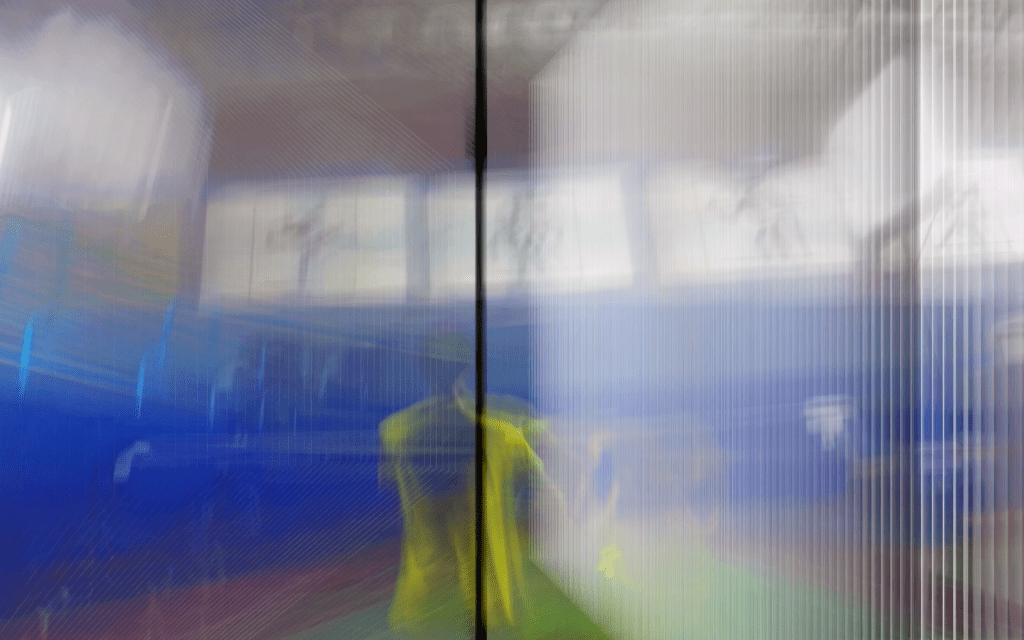
If I remember all the sound and visual excitements: this one month felt like a dream. And dreaming is a concept I wanted to relate to the project from the very beginning, so I brought two books: “The Fall of Sleep” written by Jean-Luc Nancy, because I was working recently with this book during my project selfieDREAMER and “How to Sleep” by Matthew Fuller. Sleep as glitches, body parts falling asleep, repetition and flickering pulses have been the narrative guidelines of the sound and video composition. The soundtrack of the film starts with an electromagnetic recording of strip lights. It’s a sound not easy to grasp on the surface and it’s non audible. I built an antenna made out of a badminton racket to record the electromagnetic noises. A battle starts between two sides but just the squeaking of the shoes is left. Who is playing here? Whose voices are cut out? We listen to fragments of a conversation explaining key moments of playing badminton, a practice and method of how to play together and maybe how to find ways of communication beyond language.
Source directory: Cedrik Fermont & Dimitri de la Faille (2016), Not your world music: Noise in South East Asia. Art, politics, identity, gender and global capitalism, published by Syrphe (Berlin, Germany) and Hushush (Ottawa, Canada) Matthew Fuller (2018) How to Sleep / The art, biology and culture of unconsciousness, Bloomsbury Publishing Pc Jean-Luc Nancy (2013), Vom Schlaf, diaphanes, Zürich-Berlin
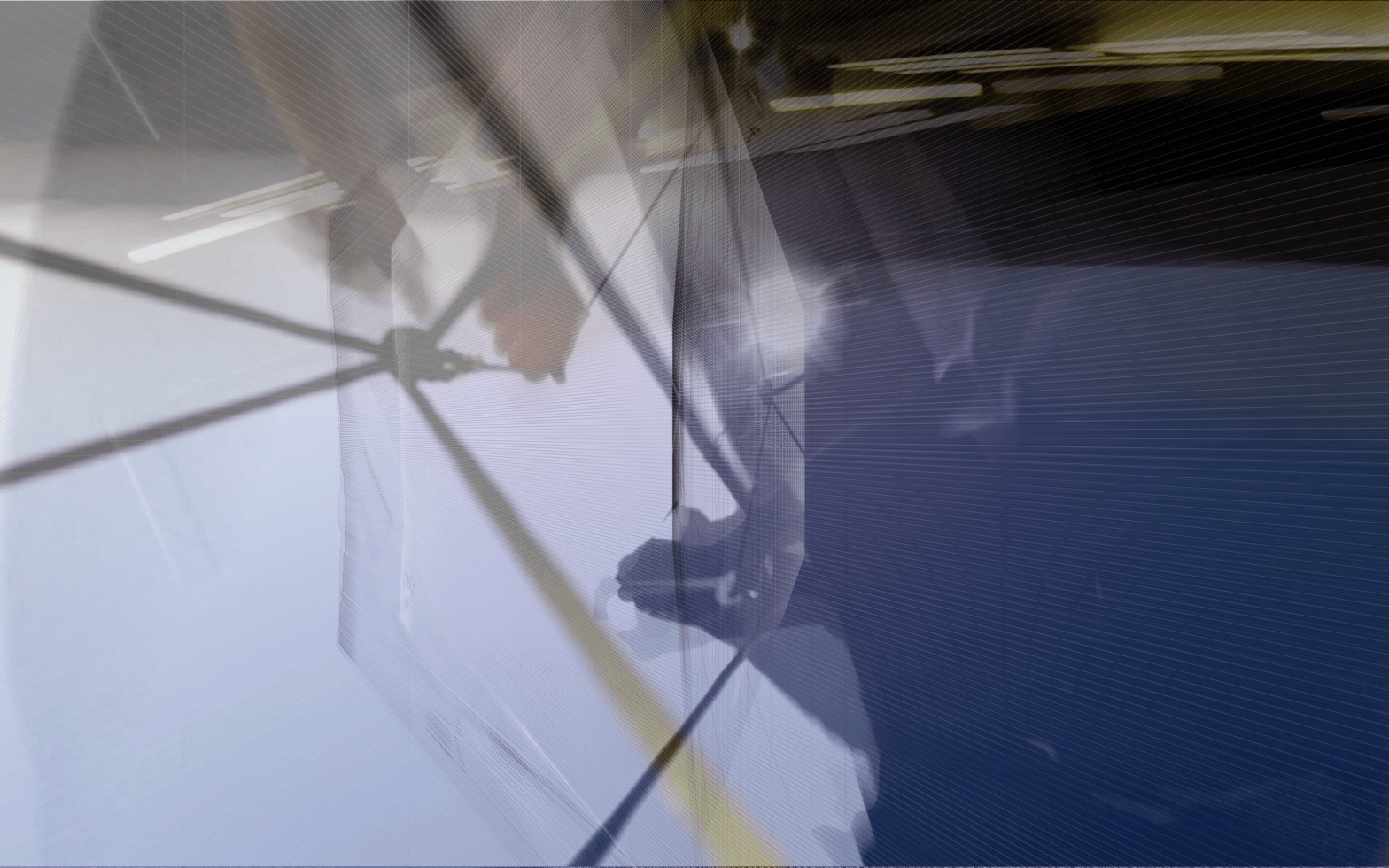
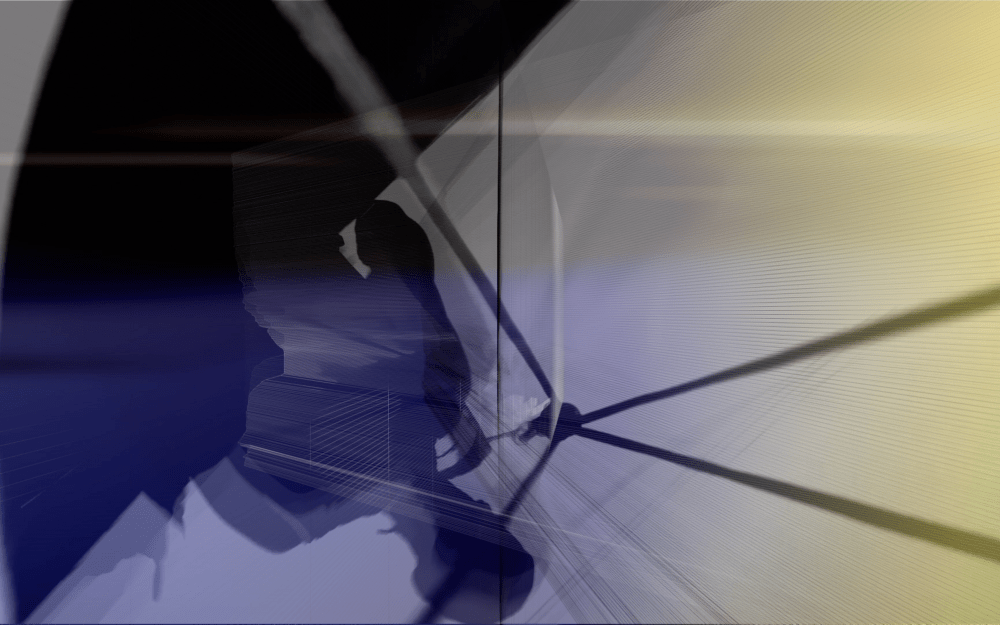
Jogja Badminton Noise is an experimental short film about the research on public spaces in Jogjakarta where people with various backgrounds and genders could eventually meet and perform. Who is the performer and who is playing? Whose bodies are absent within the framing of the video? Interviews with various people in sports halls about their relation to their bodies in the sports context as well as field recordings from various spaces of research create the underlying structure of the experimental video. Specially for the project Jogja Badminton Noise an electromagnetic antenna made from a badminton racket was built. Using images and field recordings of badminton gyms as raw material, computer-generated, digital rooms and soundscapes are created.
In Jogjakarta I tried to focus on the most popular sport, I never played in any competitive way before: Badminton. I gave myself the challenge to visit a specific range of badminton sport fields and I talked to various people about sports, about their passion and why they are playing badminton. I was interested in the location of course, as I could find many images online and before my arrival in Jogjakarta. Colors and halls looked in many ways exciting to me, and I had the wish to perform and play there. In the beginning I could not find women playing. Later on I found many young women playing badminton and explaining to me how open and inclusive badminton is for them. I am still totally amazed by the power of women in Jogjakarta. Although I felt patriarchy is very strong in power, I could feel a lot of strength and fight for equality among the people as well. I love to see other women riding cool mountain-bikes or playing the most easy accessible sport in Jogjakarta one can think of: Badminton. “Yes, it’s cheap, and we can be here together with so many friends!”, one of the players told me.
Jogja Badminton Noise is dedicated to the amazing and open minded Electronic Music and Noise scene of Jogjakarta.
Special thanks to the residency project Body Embedding. Curators: Ignatia Nilu, Ursula Maria Probst, Hongwei Duan Supported by BKA Field Recordings with Microphone OC818 by Austrian Audio
Jogja Badminton Noise 7-3-2020 – Film Screening & Talk / Discussion Padepokan Seni Bagong
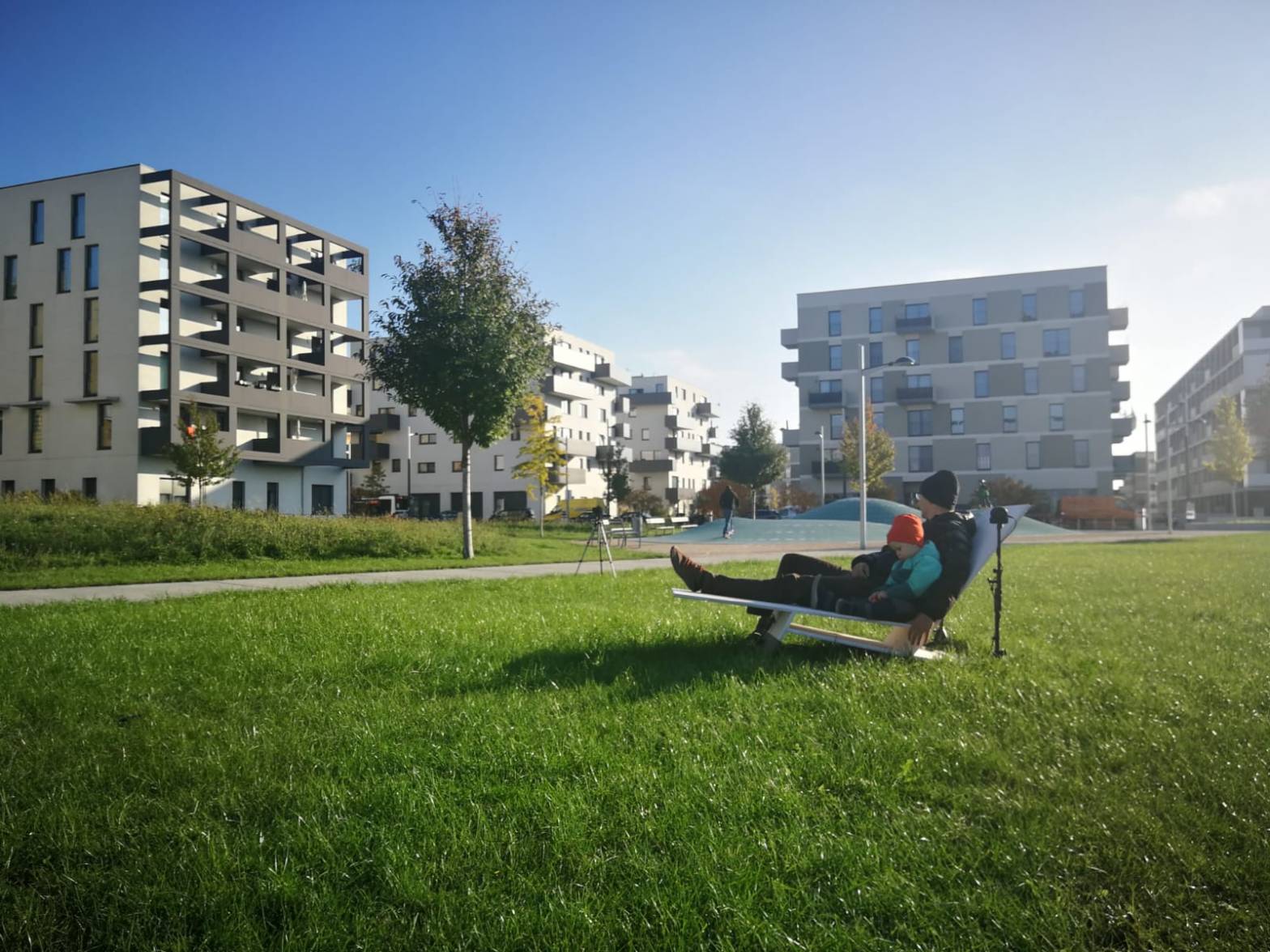
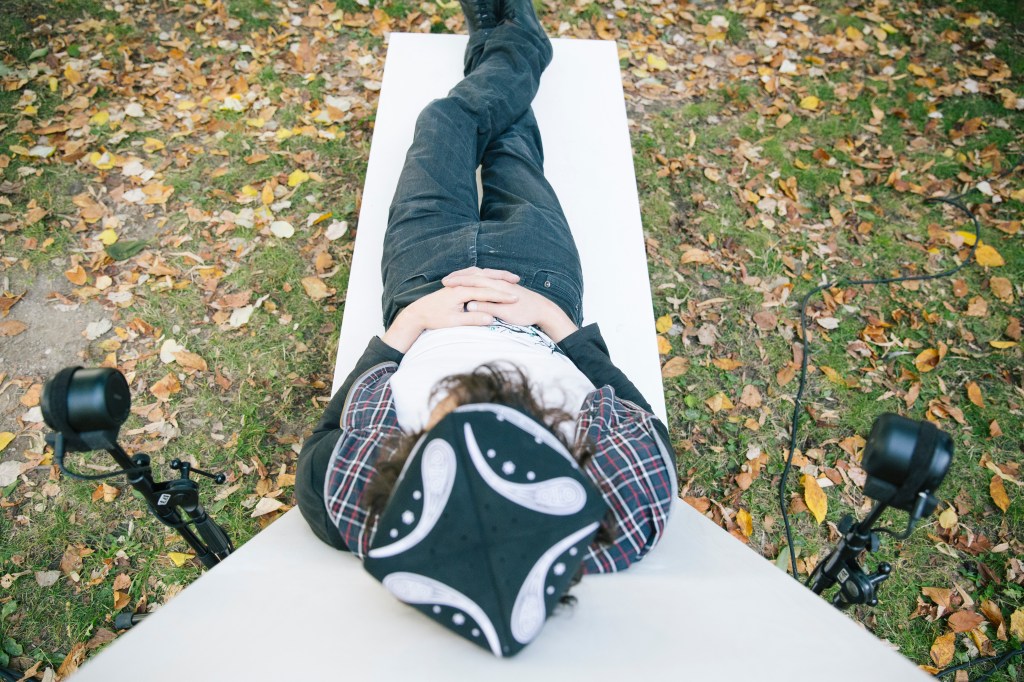
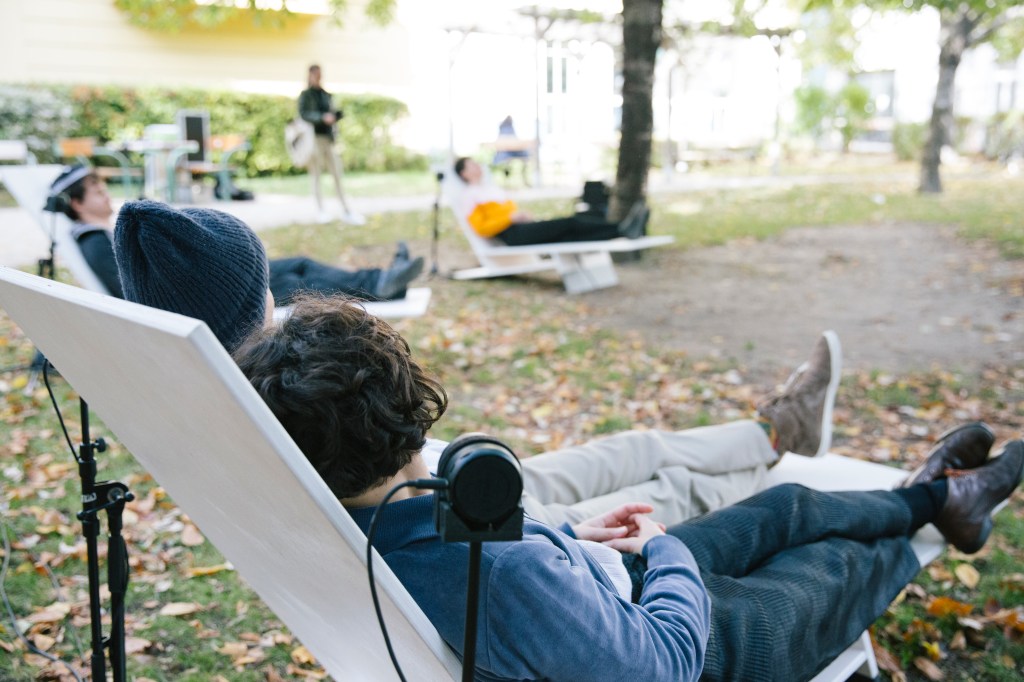
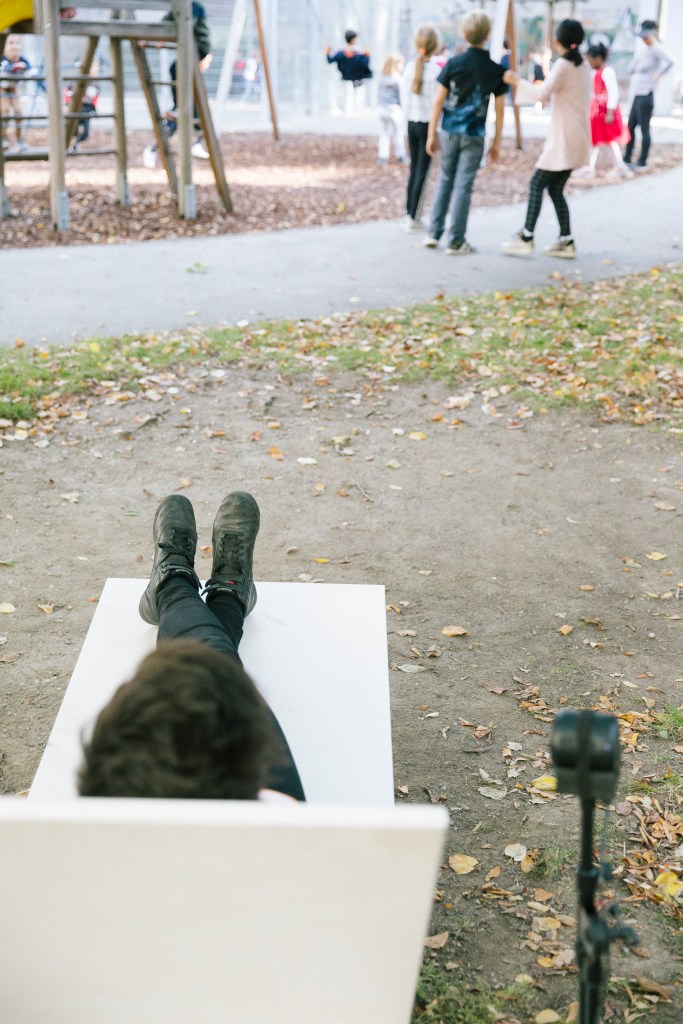
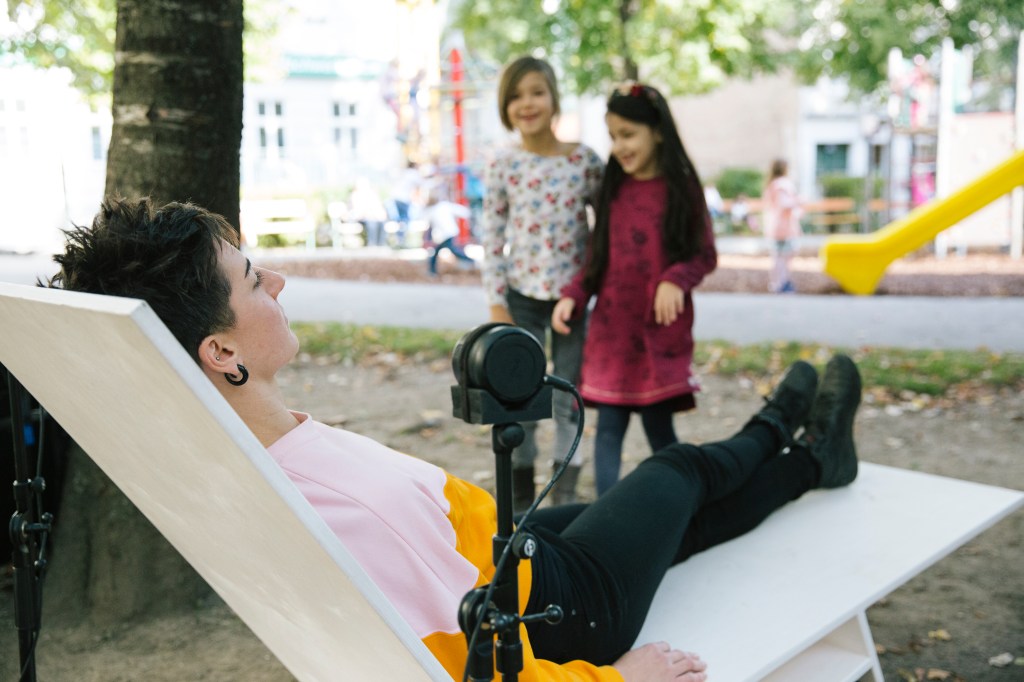
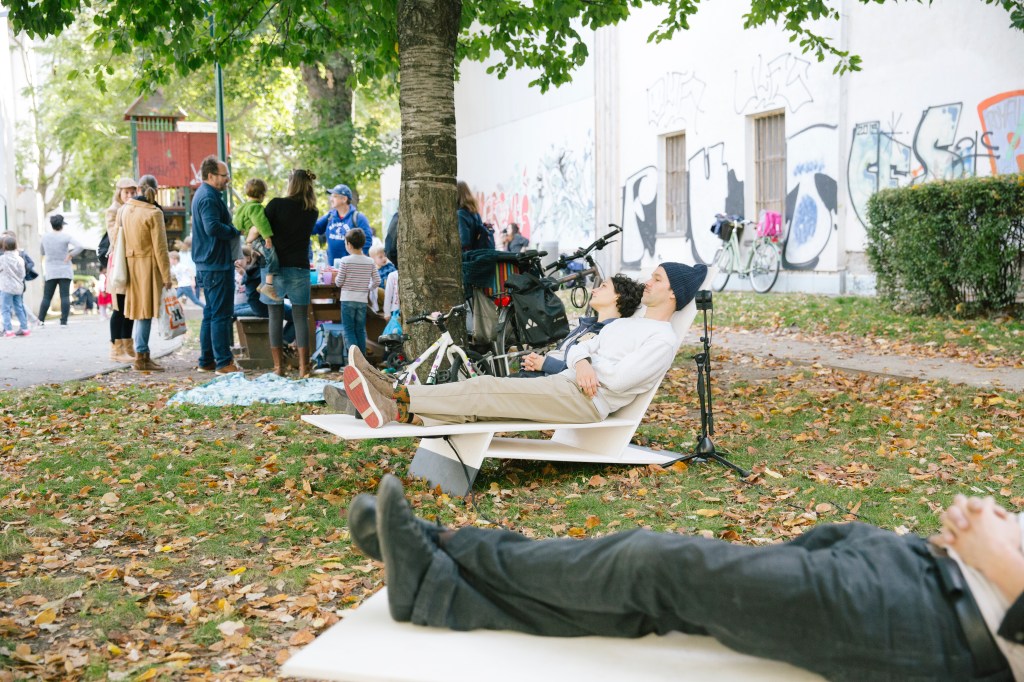
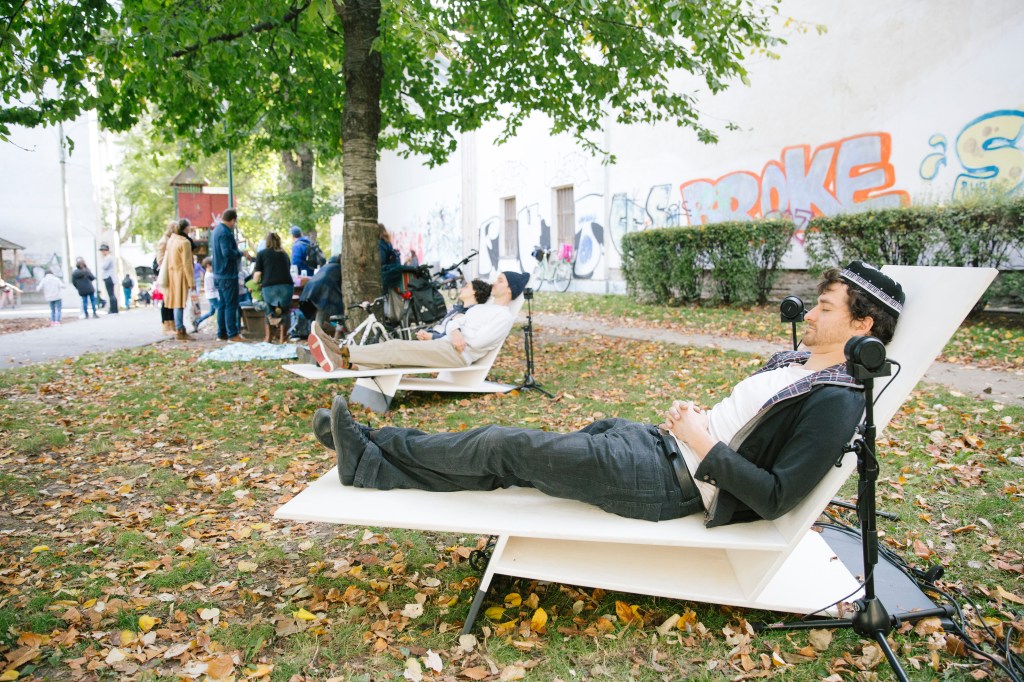
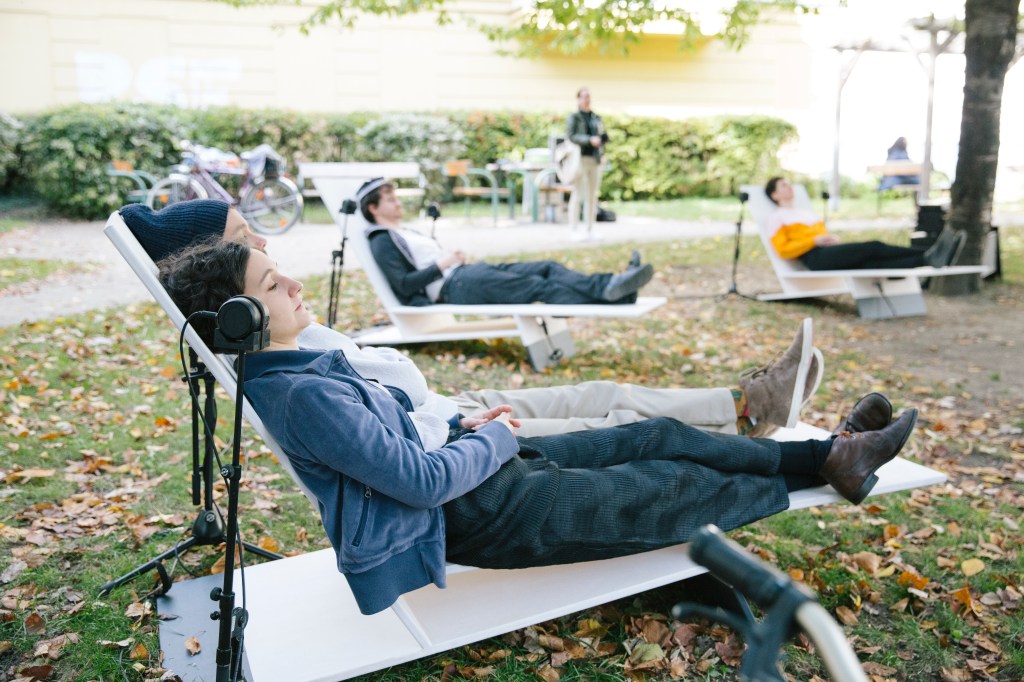
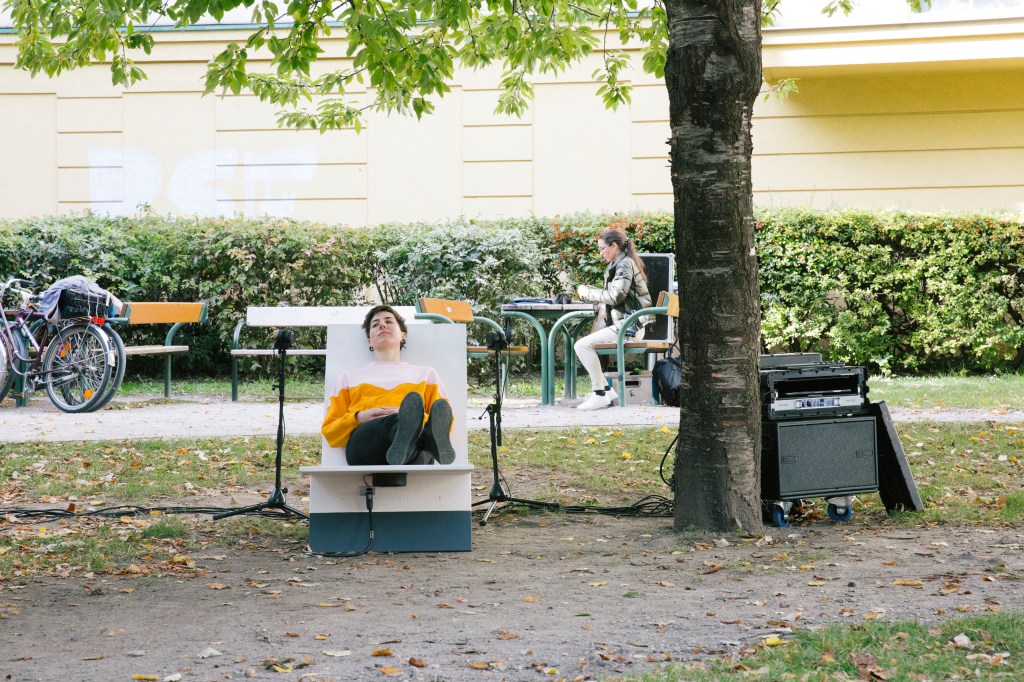
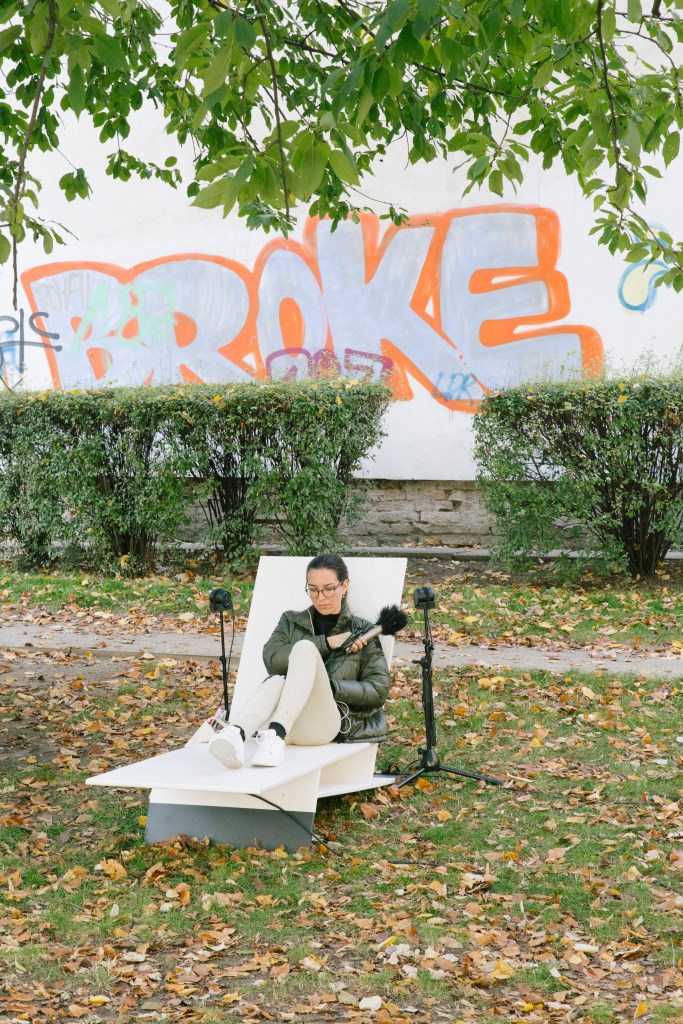
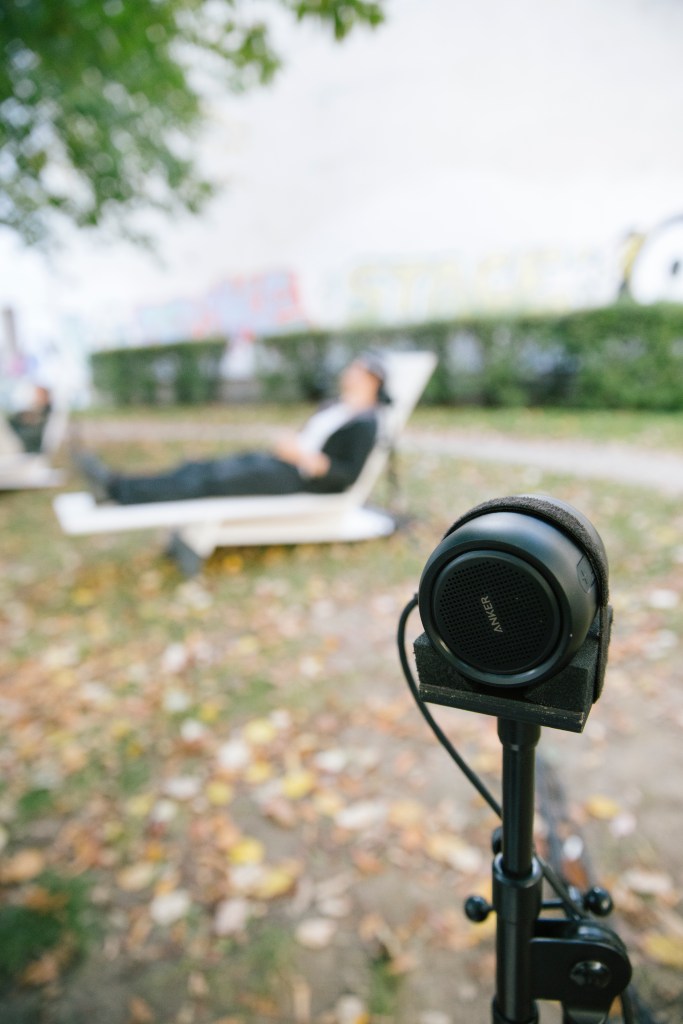
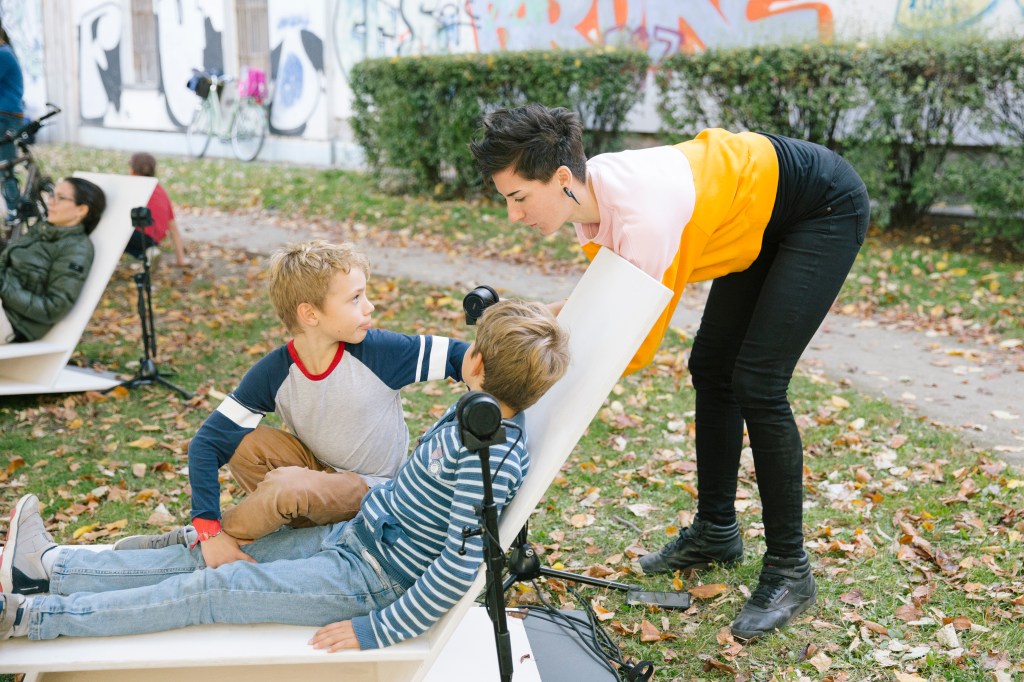
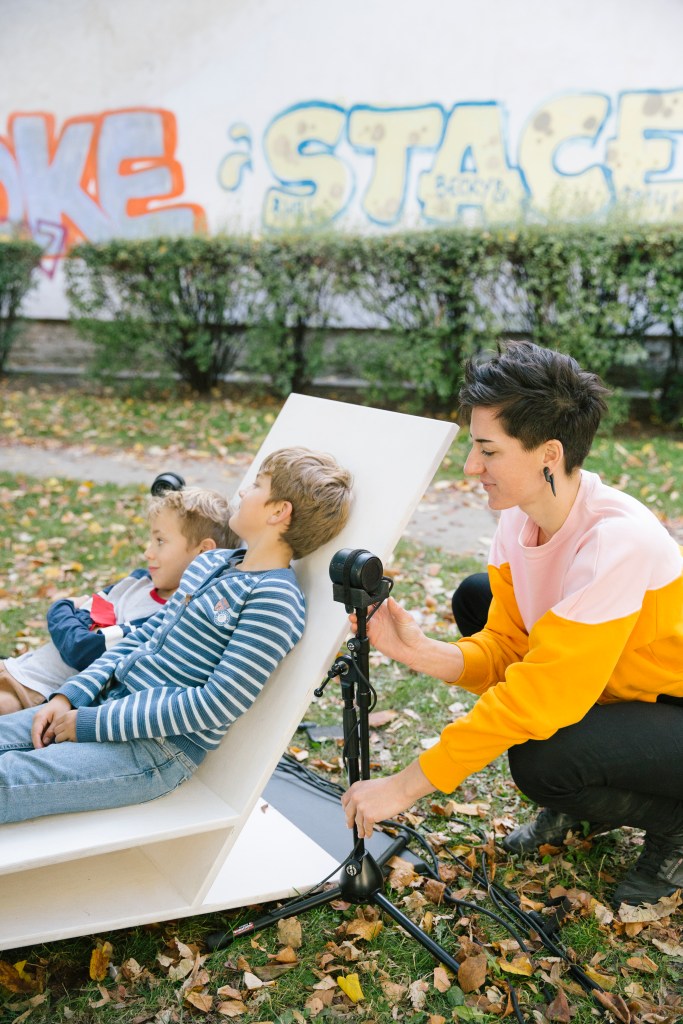
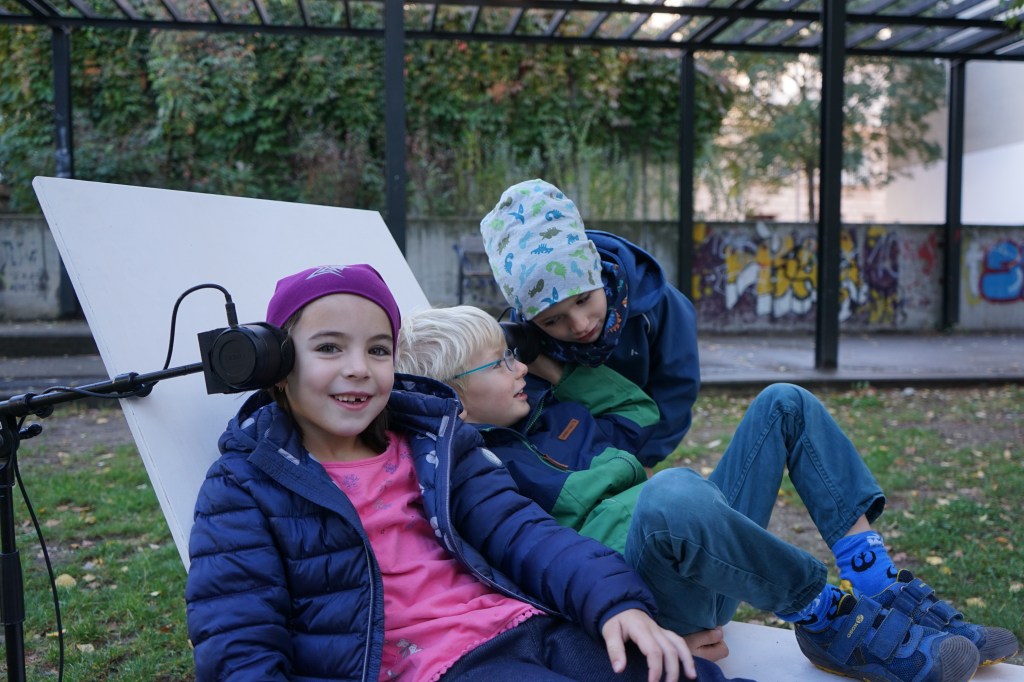
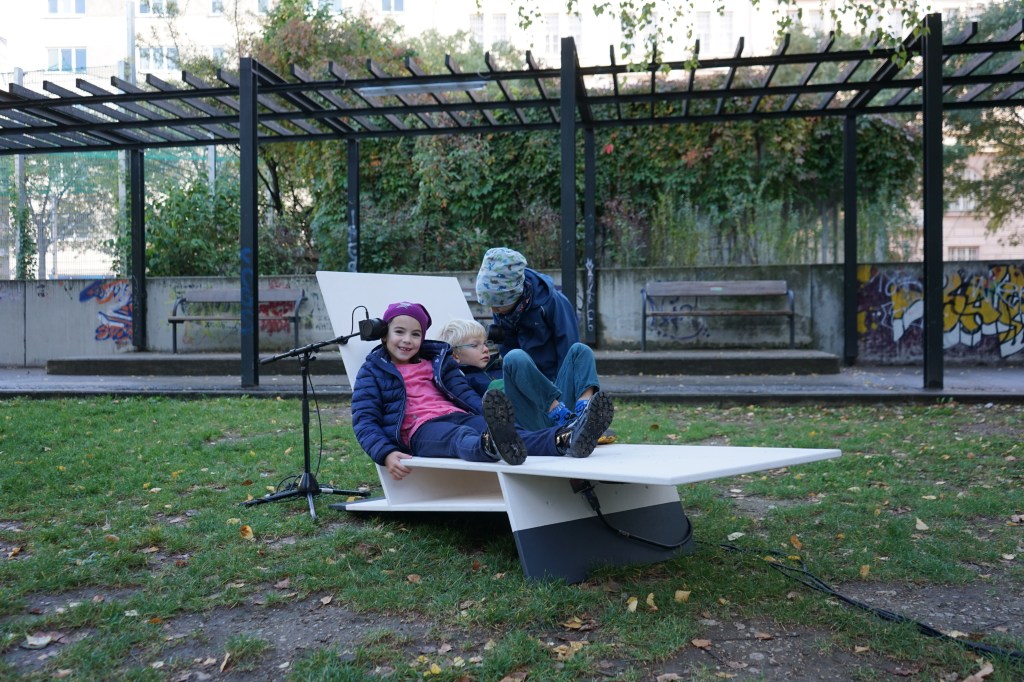
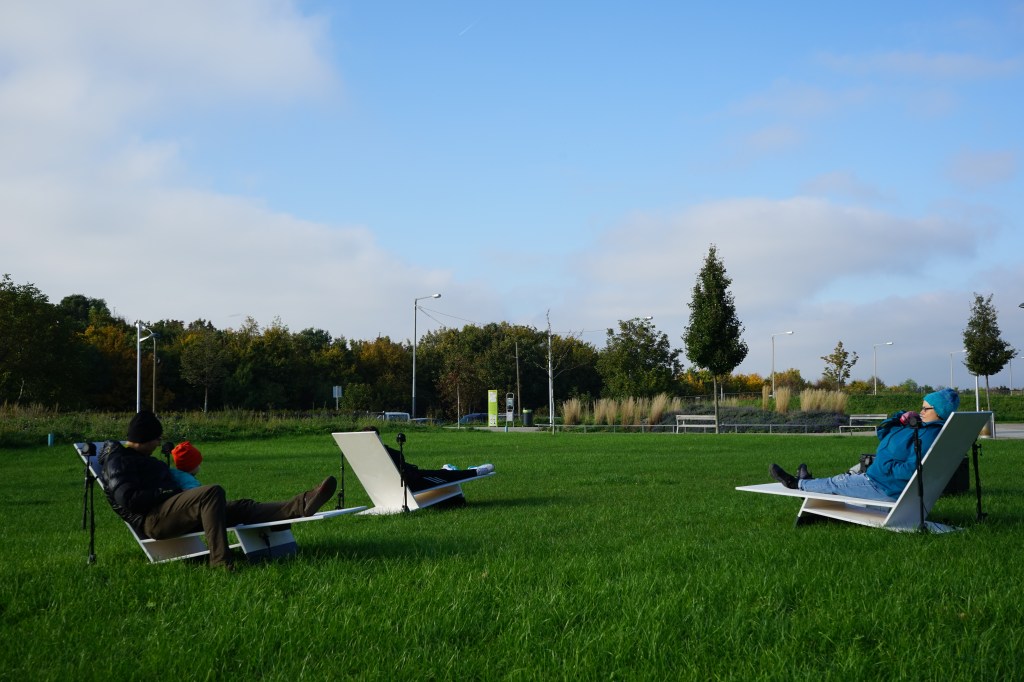
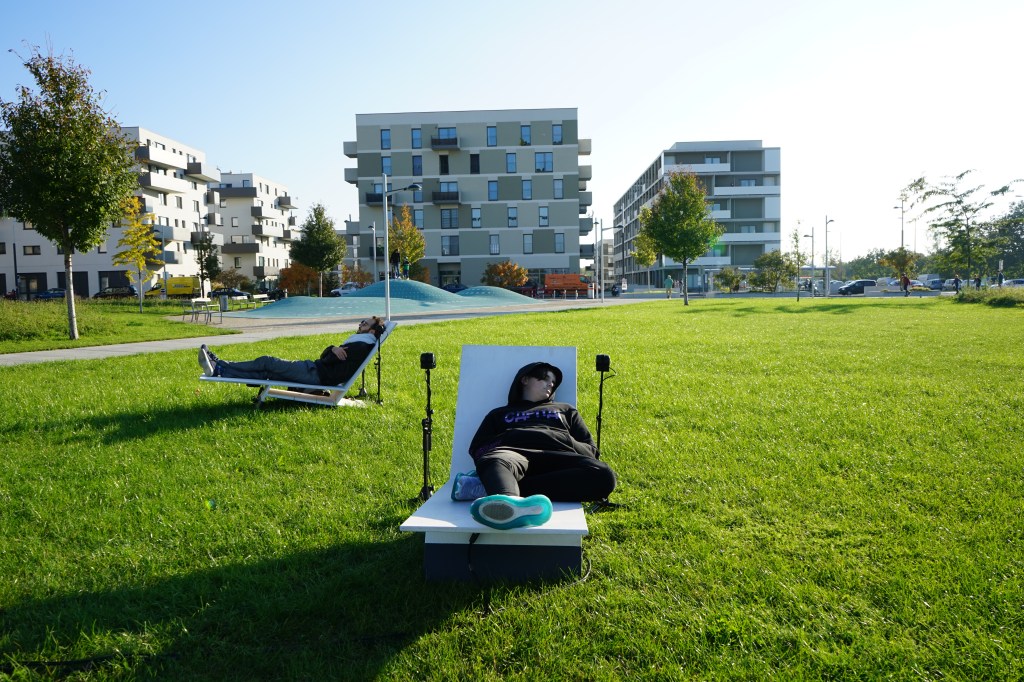
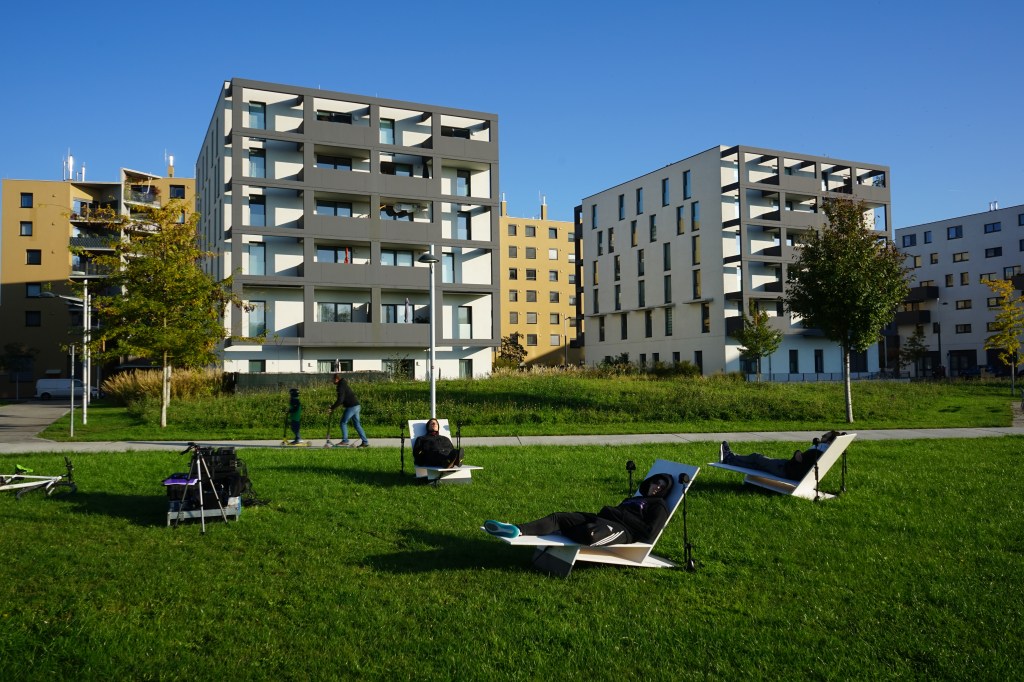
Art of Sleep brings the residents into dialogue with the work of the architect and resistance fighter Margarete Schütte-Lihotzky (1897-2000), the pedagogue and writer Minna Lachs (1907-1993), and Yella Hertzka (*1873-1948), an important Austrian women’s rights activist, publisher and gardener. Interviews with the residents form the source material for a collective remembering: the bed becomes a sound body and a performatively perceptible architecture, whereby the audience is invited to immerse itself in the dreams of others during a short sleep.
Wien du schlafende Stadt bringt die Bewohner*innen in den Dialog mit dem Werk der Architektin und Widerstandskämpferin Margarete Schütte-Lihotzky (*1897-2000), der Pädagogin und Schriftstellerin Minna Lachs (*1907-1993), sowie Yella Hertzka (*1873-1948), einer wichtigen österreichischen Frauenrechtlerin, Verlegerin und Gärtnerin. Interviews mit den Bewohner*innen bilden das Ausgangsmaterial für ein kollektives Erinnern: das Bett wird zum Klangkörper und zur performativ spürbaren Architektur, wobei das Publikum eingeladen ist während einem kurzen Schlaf in die Träume anderer einzutauchen.
Wovon träumen wir? Welche Auswirkungen hat das Wohnen auf unser Leben? Welche politischen und sozialen Diskurse bestimmen das Leben im Gemeindebau? Wie schlafen wir und wo? Schlafen im Gemeindebau? Schlafen im öffentlichen Raum? Wer hat dieses Privileg? Wer nutzt den öffentlichen Raum – den Raum zwischen den Wohnungen – zwischen Arbeit, Schlaf und Freizeit? Sind Freiräume für alle zugänglich?
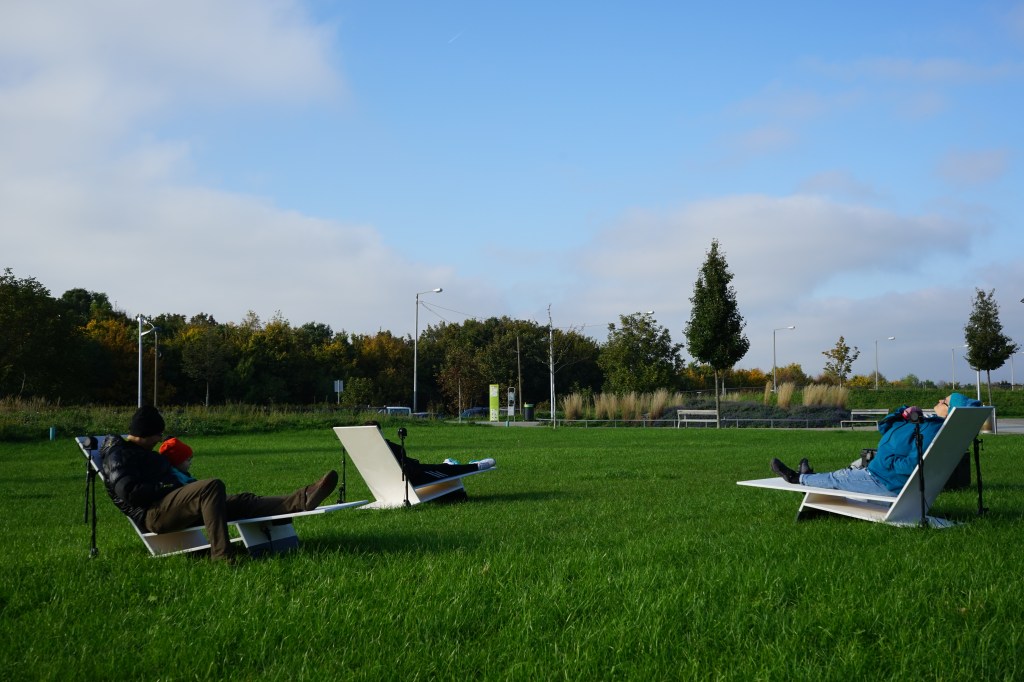
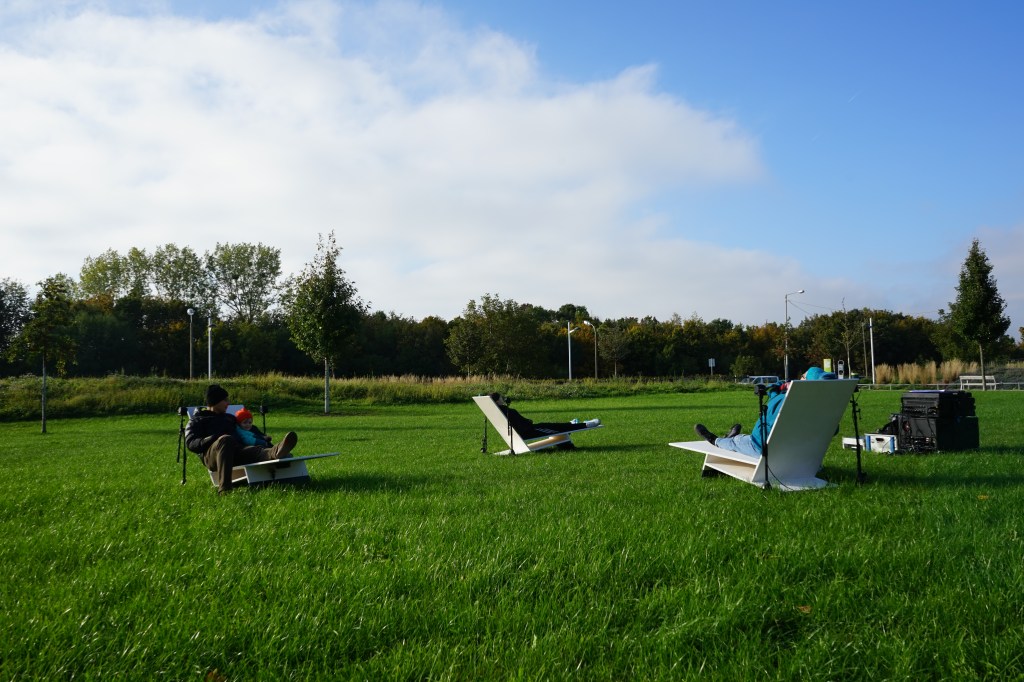
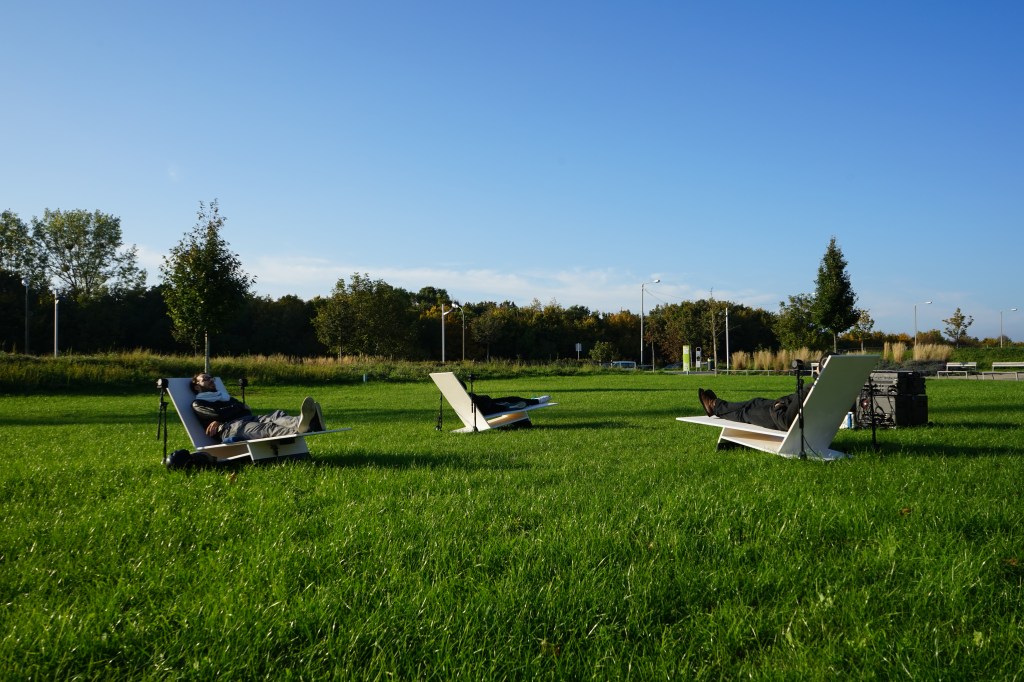
In der Installation werden die Besucher*innen eingeladen sich in ein Bett zu legen. Ein Ort bzw. eine Installation die sprichwörtlich zum Entspannen einlädt. Das Bett selbst wird zum Klangkörper: mittels Körperschallwandler ist das Objekt “Bett” der Träger für Sound und Sprache. Durch die leichten Vibrationen wird eine angenehme Grundstimmung spürbar. Die Erzählungen und Soundscapes werden mit pulsierenden Klangflächen überlagert und ergänzt durch Auszüge, Zitate und Erinnerungen zum Werk von Margarete Schütte-Lihotzky, Minna Lachs und Yella Hertzka im sinnbildlichen Dialog mit Anrainer*innen zu Wohn- und Lebenssituationen der Gegenwart.
“Nie sollten wir die Dinge statisch betrachten wie eine Momentaufnahme aus dem Blickwinkel unserer eigenen Zeit, sondern immer nur dynamisch, in ihrer Bewegung, in Verbindung mit Vergangenheit und Zukunft..” Margarete Schütte-Lihotzky
Konzept & Soundinstallation: Conny Zenk Mitarbeit Interviews & Recherche: Petra Sturm Stimme: Julia Karnel Architektur: Christian Daschek Technische Leitung: Georg Hartl Fotos urbanize: Rafael Lippuner / Bearbeitung: Sarah Glück
Do, 10 OKT 2019, 14:00-17:00 Schütte-Lihotzky-Park – Mittersteig 28, 1050 Wien Bus 59A Margaretenplatz; Bus 13A Leibenfrostgasse














 Conny Zenk